

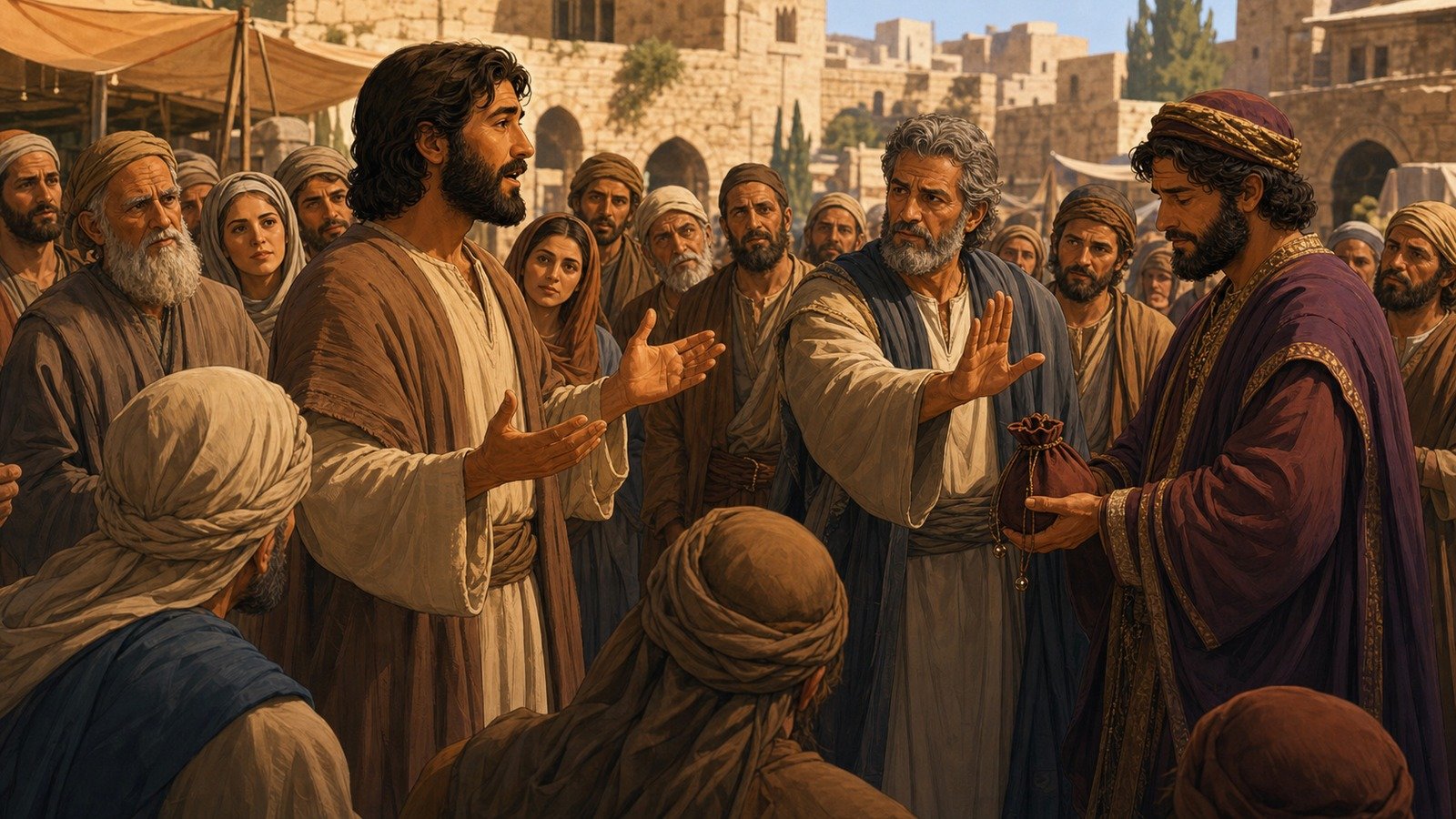
Philip, one of the seven, preaches in Samaria with striking results, including the conversion of a local sorcerer named Simon, who later tries to buy the ability to confer the Holy Spirit and is sharply rebuked by Peter for it.
Further context
2 min readPhilip, one of the seven appointed to supervise food distribution, goes down to a city in Samaria and preaches, and crowds pay close attention.
That he went to Samaria at all is the significant thing. The hostility between Jews and Samaritans was centuries old, running back to the Assyrian resettlement of the north and the dispute over whether God was to be worshipped at Jerusalem or on Mount Gerizim, and it had involved a destroyed temple and violence at festivals. A Jewish preacher choosing Samaria as his first destination is choosing the nearest place that was culturally furthest away.
A man named Simon had practised sorcery in the city and amazed its people, and they called him the Great Power of God. That title is not invented for the story; inscriptions and magical texts from the period use similar language, and the second-century Christian writers treat Simon as the founder of a heretical movement.
Simon himself believes and is baptised, and follows Philip everywhere, astonished by the signs.
When the apostles in Jerusalem hear that Samaria has accepted the message, they send Peter and John, who pray for the new believers to receive the Holy Spirit, because the Spirit had not yet come on any of them; they had simply been baptised in the name of the Lord Jesus. Then the apostles place their hands on them and they receive the Spirit.
That delay has generated a great deal of theology. What can be observed is the situation: a Samaritan church coming into existence separately from the Jerusalem church, and two apostles travelling to lay hands on them, which makes the two groups one movement rather than two rival ones with an old quarrel between them.
Simon then offers money for the ability to confer the Spirit by laying on hands, and the reply is the harshest recorded from Peter to anyone. May your money perish with you, because you thought you could buy the gift of God with money. You have no part or share in this ministry, because your heart is not right before God. Repent of this wickedness. I see that you are full of bitterness and captive to sin.
His name entered English as simony, the buying and selling of church office, which was one of the abuses the medieval reform movements and later the Reformation attacked.
The apostles preached the gospel in many Samaritan villages on their way back to Jerusalem, which is a small closing note with a good deal behind it. John is one of the two who had asked, a few years earlier, whether they should call fire down from heaven on a Samaritan village that would not receive them.
Simon's own last words are a request: pray to the Lord for me so that nothing you have said may happen to me. Whether he meant it has been argued since the second century, and nothing further is said about him.
Simony was condemned by name in church law from the early centuries and became one of the standing grievances of the medieval reform movements. That a word for a specific kind of corruption comes from a man converted in the first generation is a small comment on how early the problem arrived.