

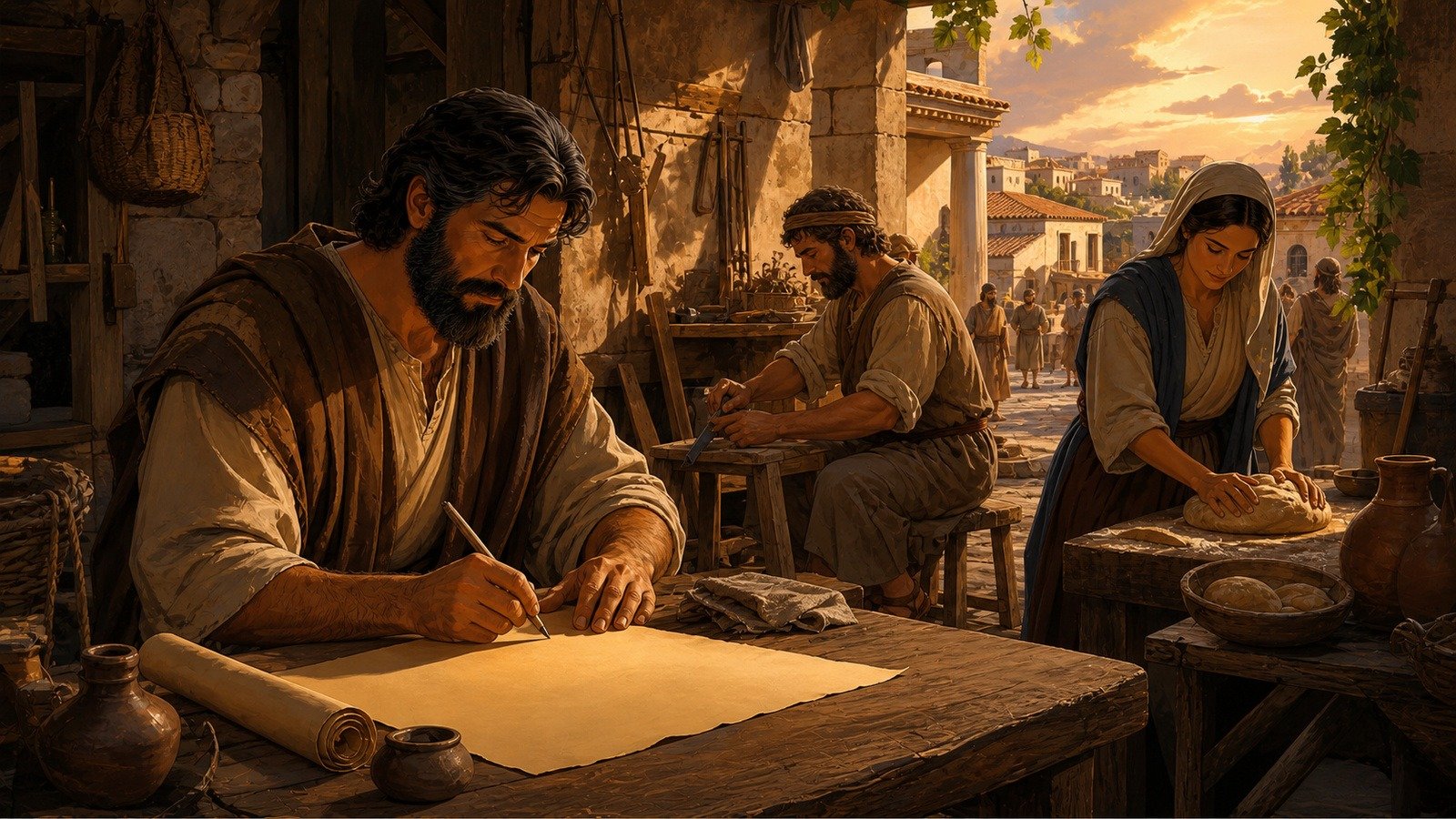
This shorter follow-up letter corrects a misunderstanding that the day of the Lord has already come, urging believers not to abandon their daily work while waiting; some scholars question whether Paul wrote it himself given differences in tone and eschatology from the first letter.
Further context
2 min readPaul writes again to Thessalonica within months of the first letter, and the occasion is a specific piece of trouble: someone has been telling the Thessalonians that the day of the Lord has already come.
How that message reached them is described with unusual precision, and it says something uncomfortable about conditions on the ground. Paul warns them not to become unsettled by some prophecy, report or letter supposed to have come from us. Somebody was either claiming a revelation or forging his signature, or both.
His counter-argument is that certain things have to happen first, and he sets them out in some of the most obscure sentences in the New Testament.
The rebellion must occur, and the man of lawlessness be revealed, who opposes and exalts himself over everything that is called God, setting himself up in God's temple, proclaiming himself to be God. And something is currently holding him back, which the readers are told they already know about, and which the writer therefore does not explain.
That last point is the difficulty. What restrains him has been identified as the Roman state, the preaching of the gospel, an angelic power, the Holy Spirit and the church, and none of the proposals can be established. The first readers evidently knew, having been told in person, and nobody wrote it down.
The practical instruction at the end is blunt and it follows from the situation. Some among them had stopped working, presumably because the end had arrived, and were living off the community. We hear that some among you are idle and disruptive. They are not busy; they are busybodies. The rule he gives is the one that has been quoted at people ever since: the one who is unwilling to work shall not eat.
Its authenticity is questioned by a minority of scholars, on the grounds that its treatment of the end differs in emphasis from the first letter and that its style is more formal. The counter-argument is that a man correcting a misunderstanding writes differently from a man reassuring the bereaved, and that the two letters are addressing opposite errors.
Paul draws attention at the end to his own handwriting: I, Paul, write this greeting in my own hand, which is the distinguishing mark in all my letters. Given what the letter says about forgeries, that is a practical measure rather than a flourish.
The Greek word behind the man of lawlessness is variously rendered, and some manuscripts read man of sin. The figure has been identified with Caligula, who ordered his statue set up in the temple in AD 40 and died before it could be done, with Nero, with a succession of popes during the Reformation, and with a person still to come.
What the letter itself asks of its readers is only that they should not be alarmed and should keep working.
The instruction about not eating comes with a personal example attached: Paul reminds them that he worked night and day so as not to be a burden while he was among them, which is a rule he had already demonstrated before stating.