

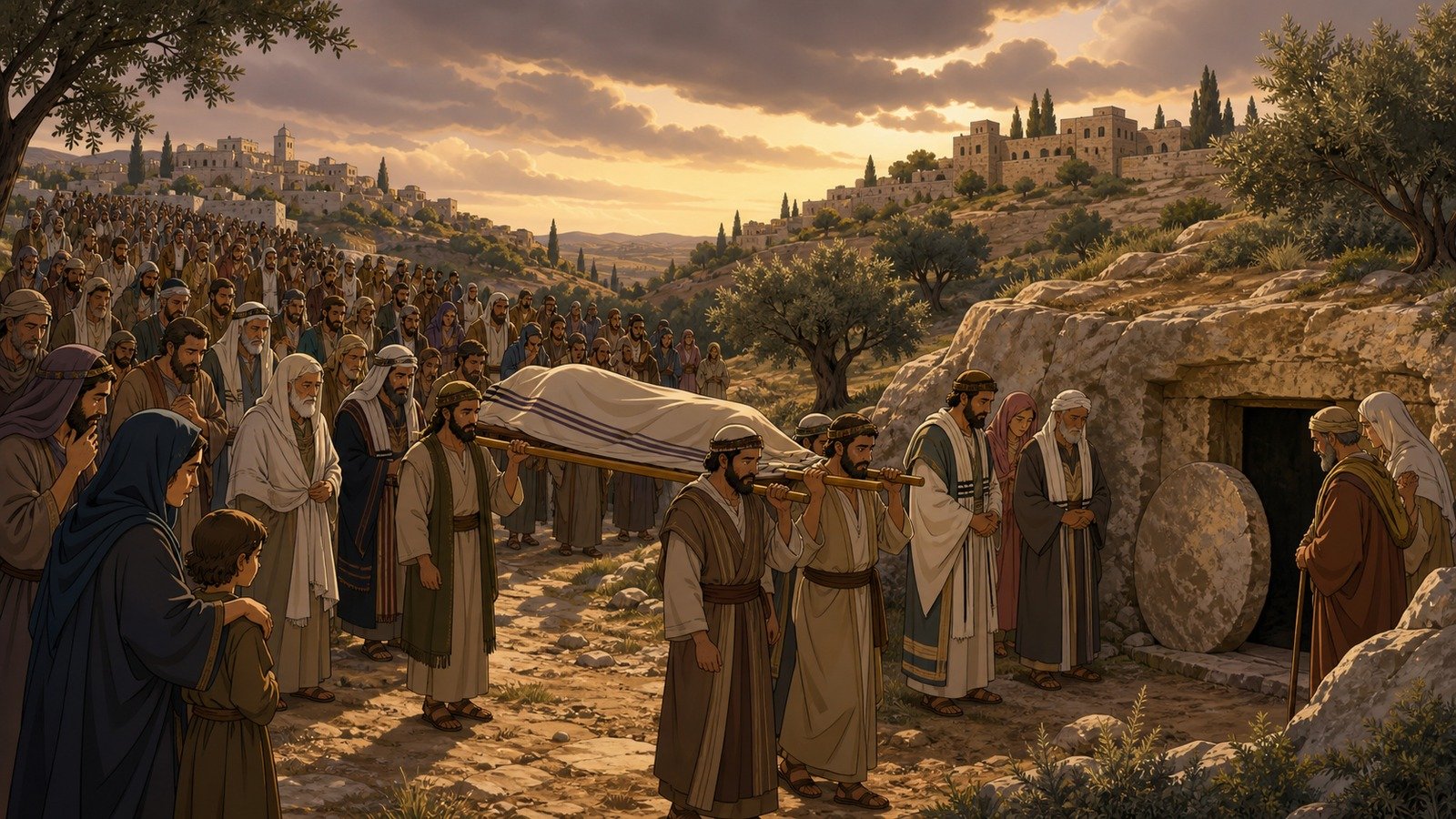
Samuel dies, and "all Israel" gathers to mourn him, a brief notice marking the end of the last of Israel's judges as the monarchy he had reluctantly anointed continues without him.
Further context
2 min readOne sentence covers it: Samuel died, and all Israel assembled and mourned for him, and they buried him at his home in Ramah.
The brevity is not indifference. A whole nation turns out, which is more than happens for most kings, and he is buried in the town he came from and ran his circuit out of, rather than in a monument.
What he had been is difficult to categorise because the categories did not exist yet. He was the last of the deliverers of the old order, the first of the great prophets, a priest by function if not by strict descent, and the man who ran the country's judicial circuit on foot from Bethel to Gilgal to Mizpah and back to Ramah year after year. He anointed two kings and rejected one of them. He is the hinge between a confederation of tribes and a monarchy, and he opposed the monarchy and then installed it.
His personal record is mixed in ways nothing tries to hide. He was raised at a sanctuary run by two corrupt priests and grew up to appoint his own two sons as judges, and they took bribes and perverted justice, which is precisely the failure he had watched destroy the household that raised him. That failure is what the elders cite when they ask for a king.
His death also removes the last check on Saul. The prophet who confronted him at Gilgal and again over Amalek is gone, and what Saul does next, in the year or so that follows, is expel the mediums and spiritists from the land and then go looking for one.
For David the timing is worse than it looks. Samuel anointed him, sheltered him at Ramah when he first ran, and was the only figure in the country with the standing to say publicly what had happened at Bethlehem. With him dead, the anointing rests on the word of a fugitive with six hundred debtors behind him.
One question about him has no answer and is worth naming. He anointed Saul knowing the request for a king was a rejection, then spent the rest of his life administering an institution he had argued against. Whether he ever reconciled himself to it is unknown. What he did do, on the day Saul was acclaimed, was write the regulations of the kingship on a scroll and deposit it at the sanctuary, which is the act of a man who has lost an argument and intends to hold the winner to terms.
The mourning is national and then everything moves on within a sentence. David goes down to the Desert of Paran, and the next episode is about sheep-shearing and a rude man called Nabal, which is the register the story returns to. Samuel is mentioned once more, and he is dead when it happens, called up by a medium at Endor to tell a frightened king that nothing has changed.