

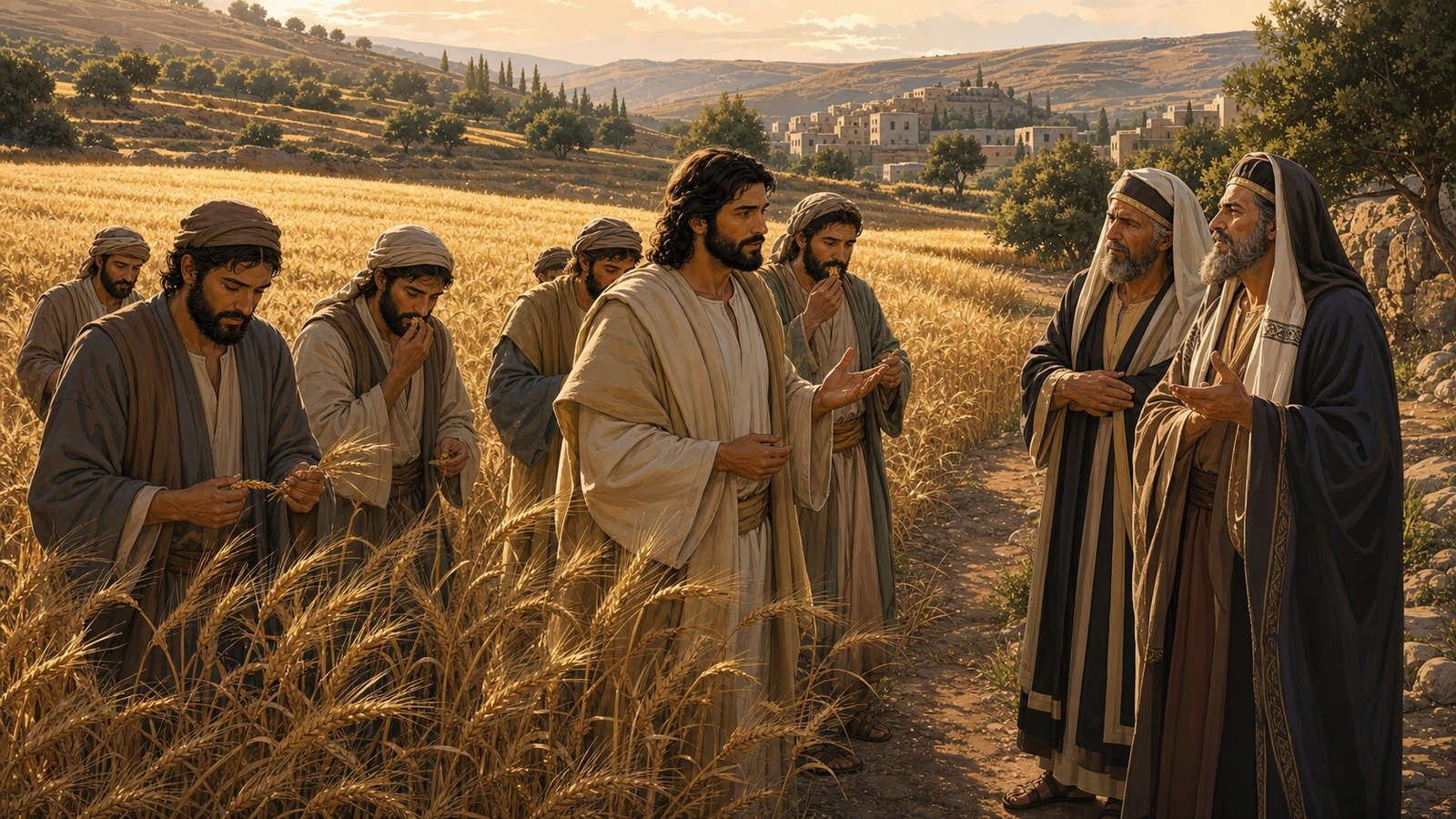
Jesus' disciples pick and eat grain while walking through a field on the Sabbath; when Pharisees object, Jesus points to David's precedent of eating consecrated bread and declares, "the Sabbath was made for man, not man for the Sabbath."
Further context
3 min readJesus and his disciples are walking through cornfields, and the disciples begin to pick heads of grain, rub them in their hands and eat them.
Taking a handful from somebody else's field was not theft. The law explicitly permitted anyone walking through a neighbour's grain to pick heads by hand, and forbade only putting a sickle to it. The objection is not about property.
The objection is about the day. Thirty-nine categories of work were later listed as prohibited on the Sabbath, and picking counted as reaping and rubbing counted as threshing. Whether those categories were already formalised at this date is uncertain, and the Pharisees present clearly regarded the actions as covered.
The first answer is a precedent from the life of David. When he and his men were hungry and on the run, they went into the house of God and ate the consecrated bread, which was lawful only for priests. That story is being used as a legal argument: an established case in which human need overrode a ritual regulation, involving the founder of the royal line.
The second answer is about the temple itself. Priests on duty there work every Sabbath, slaughtering and offering, and are innocent. The service of the sanctuary already contains an exception to the rule.
The third is a quotation from Hosea, used a second time: if you had known what these words mean, I desire mercy, not sacrifice, you would not have condemned the innocent.
And then two sentences that go further than any of the arguments. The Sabbath was made for man, not man for the Sabbath. So the Son of Man is Lord even of the Sabbath.
The first of those is a statement about purpose that several rabbis of the period would have agreed with in substance. The second is not, and it is the sentence that turns a dispute about grain into a claim about authority.
One further detail about the fields makes the scene ordinary rather than exotic. Grain in Galilee ripened between April and June, and the right of a passer-by to take a handful was a standing provision for the poor, alongside the requirement to leave the edges of a field unharvested and not to go back for what was dropped. What the disciples are doing is what hungry people did, on land they did not own, entirely lawfully.
The Sabbath question runs through the whole ministry and it is worth understanding why it mattered so much. Along with circumcision and the food laws, Sabbath observance was one of the few visible markers that distinguished a Jewish community in the ancient world, and it had been the specific practice Antiochus IV outlawed on pain of death two centuries earlier. Men had died rather than break it, and had refused to defend themselves in caves on the day. Nobody arguing about it here was arguing about a technicality.
Picking heads of grain by hand while walking through someone else's field was explicitly permitted by the law, which allowed a passer-by to pluck with the hand but not to put a sickle to the standing corn.
The objection is not theft. It is that rubbing the heads to separate the grain counted as threshing, and threshing was one of the categories of work forbidden on the Sabbath.
The reply cites a precedent from David, who ate the consecrated bread from the sanctuary at Nob when he and his men were hungry, which was against the law and which no one had ever condemned him for.
Then a general principle: the Sabbath was made for man, not man for the Sabbath.
Rabbinic discussion contains something close to that, in a ruling that the Sabbath is given to you and you are not given to the Sabbath, so the principle itself was not alien. What follows it is: so the Son of Man is Lord even of the Sabbath.