

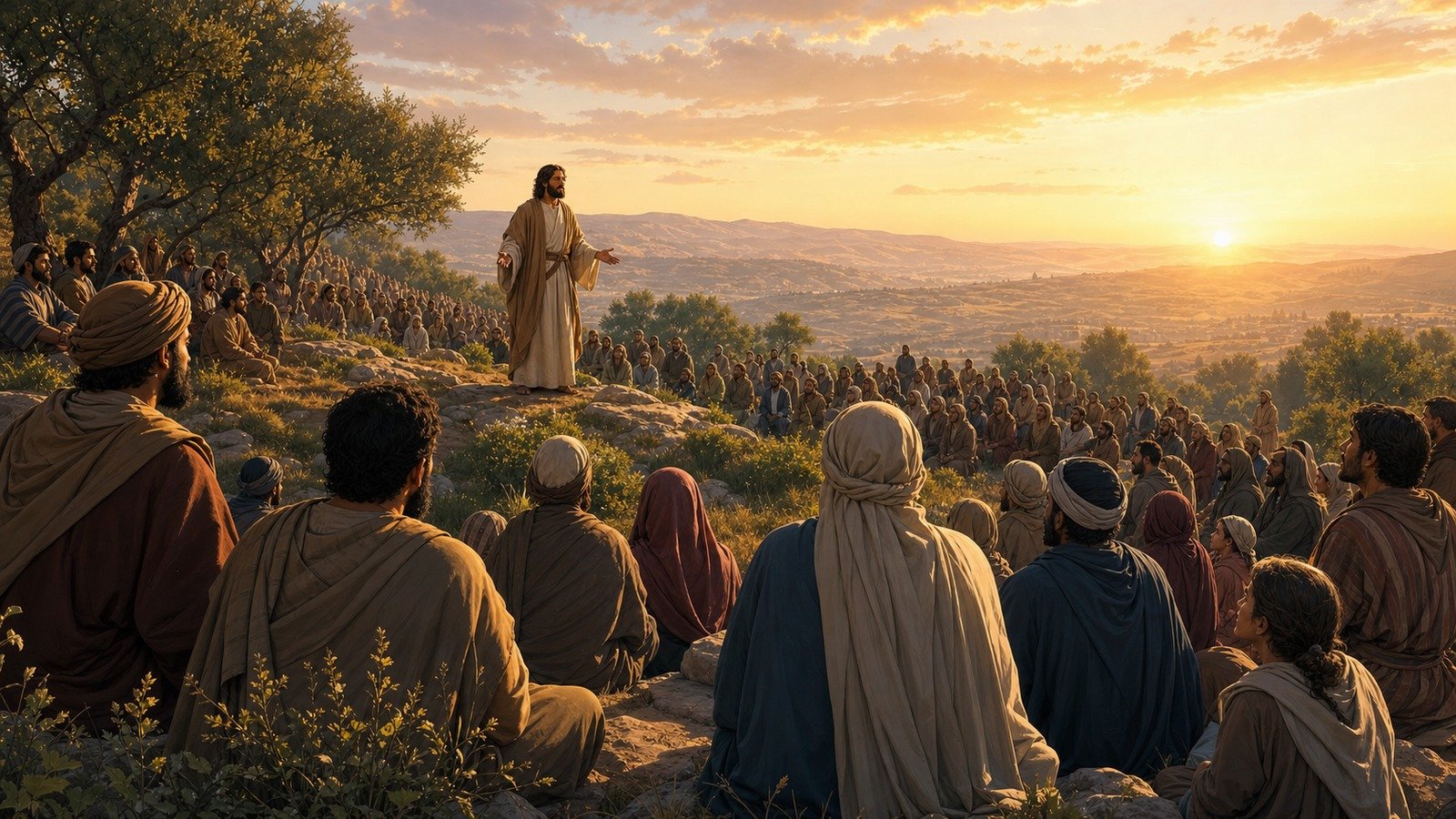
Paul later lists a fuller sequence of resurrection appearances not all individually narrated in the Gospels, including one to more than five hundred people at once, most of whom, he notes, were still alive at his time of writing and could be asked directly.
Further context
3 min readThe fullest list of resurrection appearances is not in any of the Gospels. It is in a letter Paul wrote to the church at Corinth in about AD 55, and it is the earliest surviving written statement about the resurrection by roughly fifteen years.
He introduces it as material he received and passed on, using the technical vocabulary for transmitting a fixed tradition, which means the formula was already in circulation before he wrote it down. Scholars across the range of opinion, including those who reject the resurrection entirely, generally date the wording to within a few years of the crucifixion, which makes it extraordinarily early by the standards of ancient sources.
The sequence he gives is this. Christ died for our sins according to the Scriptures, was buried, was raised on the third day according to the Scriptures, and appeared to Cephas, then to the Twelve. After that he appeared to more than five hundred of the brothers and sisters at the same time, most of whom are still living, though some have fallen asleep. Then he appeared to James, then to all the apostles. And last of all he appeared to me also, as to one abnormally born.
Several of those are recorded nowhere else.
The five hundred is the most striking, partly for the number and partly for the clause attached to it. Saying that most are still living is an invitation to check, addressed to a congregation in a Greek port with regular traffic to Judea.
The appearance to James is the other one worth pausing on. James was his brother, and the family had not believed in him during his lifetime; at one point they went to take charge of him because they thought he had lost his mind. Within a few years of the crucifixion, James is the leading figure in the Jerusalem church, and Josephus records his execution on the orders of a high priest in AD 62. Whatever happened between those two positions is not described anywhere, and this line is the only clue.
Paul's own inclusion of himself in the list is unusual, since his experience came later and was of a different kind. The phrase he uses of himself is harsh: one abnormally born, literally an untimely birth or a miscarriage.
Cephas is the Aramaic form of Peter, and Paul uses it consistently, which is a small indication that the formula he is quoting came to him from an Aramaic-speaking source rather than being composed in Greek.
The list also has a gap that is hard to explain if it were invented later: no women appear in it, although all four Gospels put women at the tomb first. The likeliest reason is the one everyone gives, that a formula composed for public argument used witnesses a court would accept.
Corinth was a Roman colony and a port with traffic to Syria, which is what makes the invitation to check the five hundred witnesses more than rhetorical.
Paul wrote to Corinth from Ephesus, roughly twenty-five years after the events, to a congregation that included people who doubted bodily resurrection on philosophical grounds. The list of witnesses is deployed in an argument, not in a narrative, which is why it reads like a legal submission and why the names are the ones he does.