

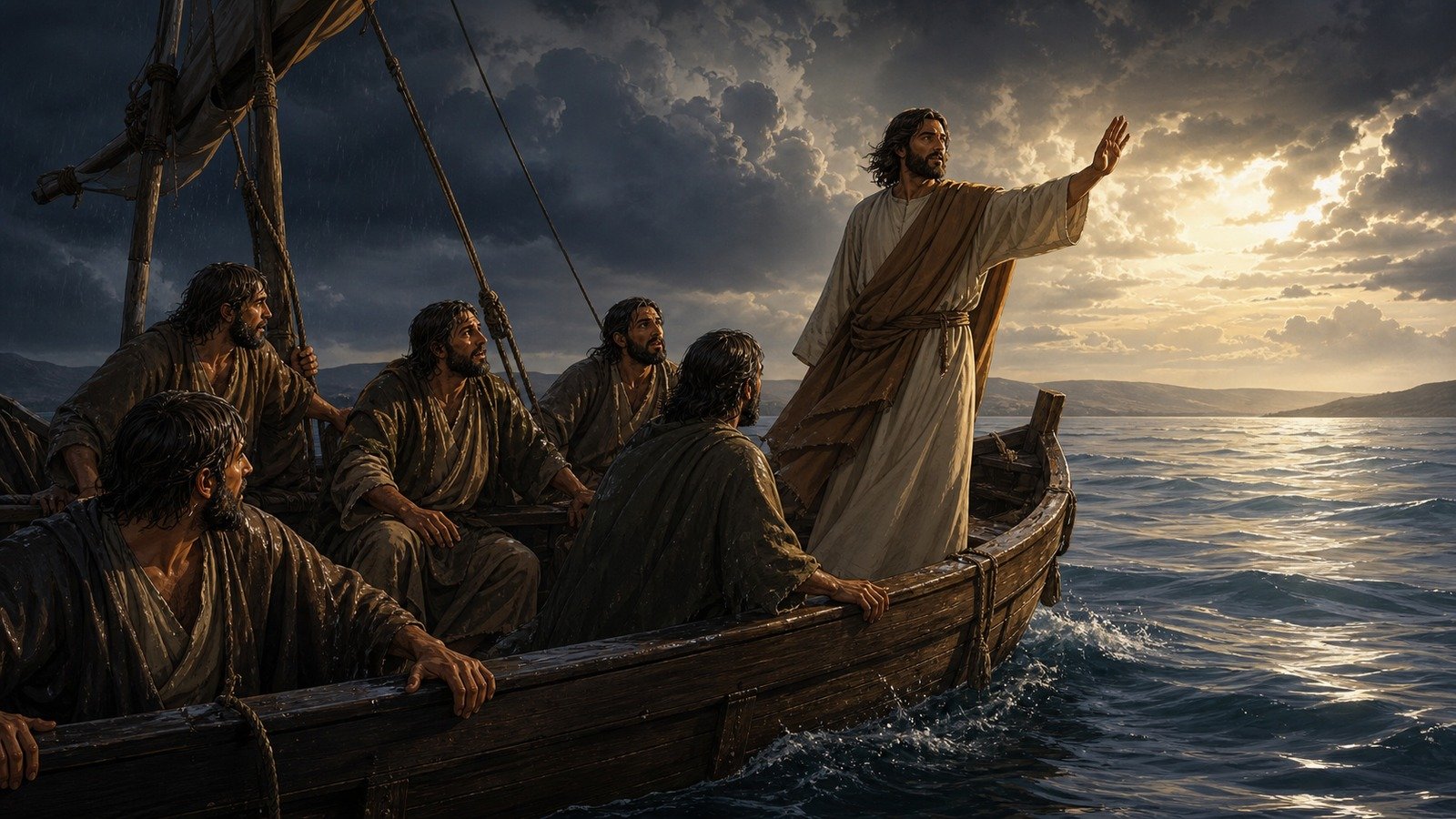
Asleep in a boat during a sudden, violent storm on the Sea of Galilee, Jesus is woken by his terrified disciples and calms both wind and waves with a word, prompting the awed question, "What kind of man is this?"
Further context
2 min readJesus and his disciples set out across the lake in the evening, and he falls asleep in the stern on a cushion, which is the only time he is described sleeping anywhere.
The lake is two hundred metres below sea level, ringed by hills with steep ravines running down to it, and cold air off the Golan heights funnelling through those gaps onto warm water produces violent squalls with very little warning. Local boatmen still describe them. The men in the boat include four professional fishermen who had worked that water all their lives, and they are frightened.
The waves break over the boat so that it is nearly swamped, and they wake him. What they say is not a request. Teacher, do you not care if we drown?
He gets up, rebukes the wind and says to the waves, quiet, be still. The verb used to the sea is the same one used to the spirit in the Capernaum synagogue, and it means to be muzzled.
Then it is completely calm, and the second part of the sentence is the part that matters: the wind died down and it was completely calm. A wind dropping is one thing; a lake going flat immediately is another, since waves take a long time to subside.
His question to them is sharper than their question to him. Why are you so afraid? Do you still have no faith?
Their reaction is described with a phrase that is stronger in Greek than most translations manage: they were terrified. Having just stopped being frightened of drowning, they are now frightened of him, and the question they ask each other is the one the whole sequence has been building to. Who is this? Even the wind and the waves obey him.
Anyone raised on the Hebrew scriptures would have heard something in that. The sea in that literature is the standard image of chaos and threat, and stilling it is something God does and nobody else. A psalm describes sailors caught in a storm crying out to the LORD, who stills the storm to a whisper and hushes the waves of the sea, and brings them to their desired haven. The men in the boat are not asking a rhetorical question.
They arrive on the far shore, which is Gentile territory, and are met by a man nobody could control.
The lake sits about two hundred metres below sea level in a basin with hills rising steeply on the eastern side, and cold air funnelling down through the ravines onto warm water produces violent squalls with very little warning. Fishermen who worked it all their lives knew this and were frightened anyway, which tells you what the boat was doing.
The vessel itself is no longer a matter of guesswork. In 1986 a drought lowered the water level and exposed a first-century fishing boat in the mud near Migdal, since excavated and conserved. It is about eight metres long and two and a half wide, built of cedar and oak, with room for a crew and passengers and a raised stern platform at the back, which is where a man could lie down on a cushion.