

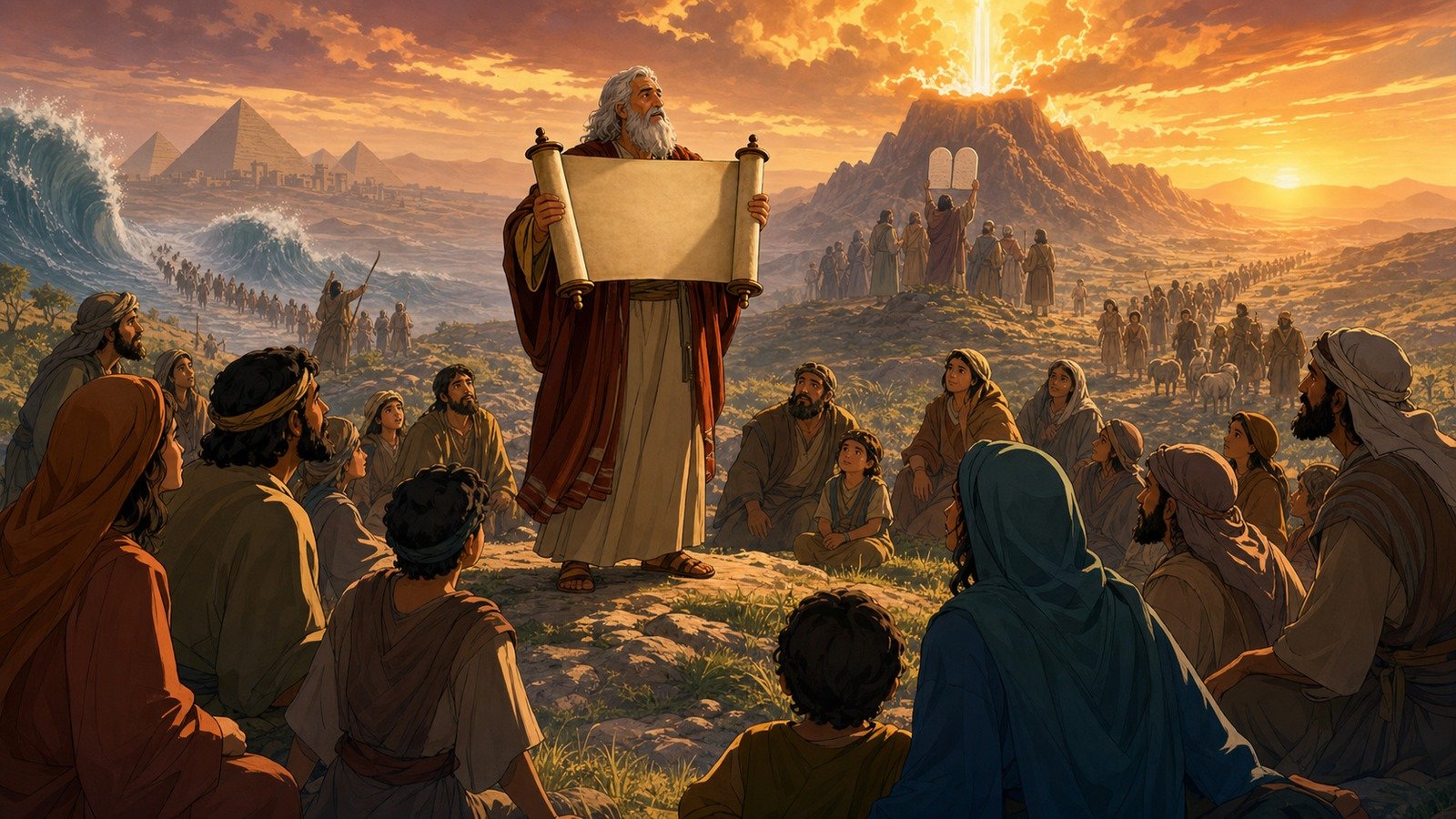
On the plains of Moab, Moses reviews forty years of Israel's history for the new generation and restates the Law, including the Shema, Israel's central confession of faith.
Further context
2 min readThe last book of the five is a series of addresses delivered on the plains of Moab in the eleventh month of the fortieth year, to a generation that was not present at Sinai. Its English name comes through Greek and means second law, which translates a phrase about a copy of the law. Its Hebrew name is simply Words, from the opening line.
It begins with history rather than legislation, and it retells the disaster at Kadesh Barnea from Moses' own point of view, which differs in emphasis from the version given earlier. Here it is the people who propose sending men ahead to scout the land, and he says the idea seemed good to him. He recalls telling them not to be terrified, and reminds them that they refused to go up and grumbled in their tents that the LORD hated them. He also says something the earlier version does not: because of you the LORD was angry with me also.
Then come the words that became the central statement of Jewish faith. Hear, O Israel: the LORD our God, the LORD is one. Love the LORD your God with all your heart and with all your soul and with all your strength. The Hebrew opening word gives it its name, and it is recited twice daily in Jewish practice.
The instructions attached are about transmission rather than doctrine, which is the concern of the whole book. These commandments are to be on your hearts. Impress them on your children. Talk about them when you sit at home and when you walk along the road, when you lie down and when you get up. Tie them as symbols on your hands and bind them on your foreheads. Write them on the doorframes of your houses and on your gates. The last two are the basis of the small boxes worn in prayer and the case fixed to a doorpost, both of which contain this text and are still in use.
What the addresses anticipate as the real danger is not hardship but success. When you eat and are satisfied, in cities you did not build, with houses full of good things you did not provide, wells you did not dig and vineyards you did not plant, be careful that you do not forget. That warning is delivered to people who are about to receive everything they have been promised, by a man who will not receive any of it.
The setting gives the whole book its tone. This is a man of a hundred and twenty who has been told he will not cross the river, addressing a nation that is about to, on the last day of his life. Everything in it is delivered by somebody with no personal stake in the outcome, to people who will inherit everything he worked for. He never mentions that, except once, when he says he asked to be allowed to go over and see the good land and was told not to raise the matter again.
Asked centuries later which commandment was the most important, Jesus quoted this passage, and one of the Gospels records him including the opening declaration about God being one, which the others leave out.