

Joab engineers Absalom's return to Jerusalem through a staged appeal from a wise woman, but David keeps Absalom at a distance for two further years even after allowing him back, a reconciliation in name only.
Further context
2 min readJoab can see what the situation is doing to the king and engineers a solution by the same method Nathan used: a fictional case designed to extract a ruling.
He finds a wise woman from Tekoa, dresses her in mourning clothes and coaches her. She comes to the king with a story about two sons who quarrelled in a field with nobody to separate them, one killing the other, and the whole clan now demanding that she hand over the survivor so they can execute him for his brother's blood, which would extinguish her husband's name and leave her with nothing.
David rules in her favour twice, and the second time he swears an oath that not one hair of her son's head will fall to the ground.
Then she turns it. Why then have you devised a thing like this against the people of God? In saying this, the king convicts himself, for the king has not brought back his banished son. And she adds an observation that has become proverbial: like water spilled on the ground, which cannot be recovered, so we must die. But God does not take away life; instead he devises ways so that a banished person does not remain banished from him.
David asks whether Joab put her up to it and she admits it, and Joab is told to go and bring the young man back.
What follows is the failure. Absalom returns to Jerusalem and is ordered to his own house and must not see the king's face, and that arrangement holds for two full years. A man is brought back from exile and then placed under house arrest by his father, with the murder never discussed, no trial, no pardon and no conversation.
He is described at this point in terms that read like propaganda: in all Israel there was not a man so highly praised for his handsome appearance, and when he cut his hair at the end of each year it weighed two hundred shekels by the royal standard.
After two years he sends for Joab twice and is ignored, so he sets Joab's barley field on fire, which produces an immediate visit. His message to his father is a demand rather than an appeal: why have I come from Geshur? It would be better for me if I were still there. Now then, I want to see the king's face, and if I am guilty of anything, let him put me to death.
The name Absalom means father of peace, which is either an accident or the sourest joke in the whole story.
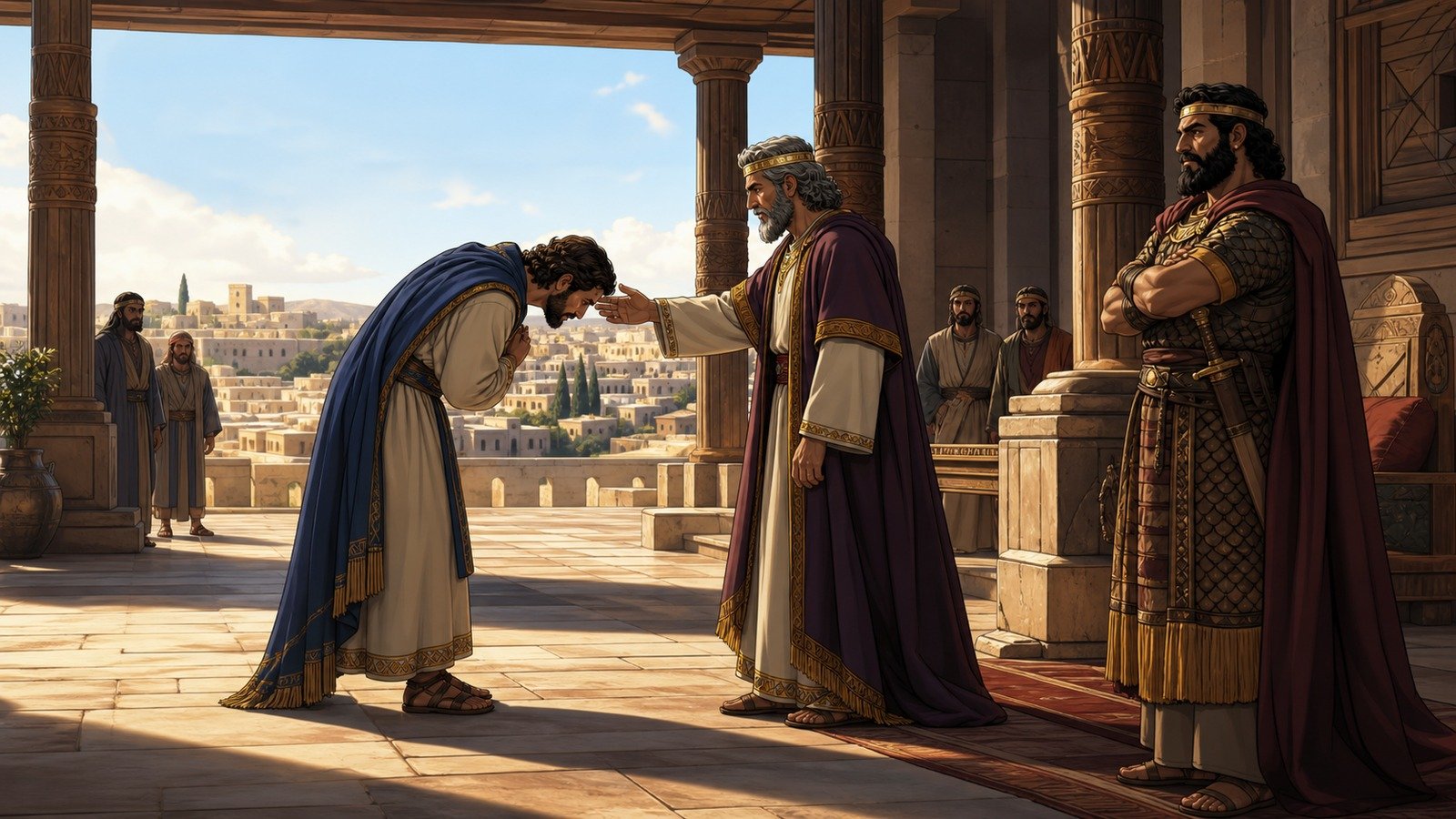
He is summoned, comes in, bows with his face to the ground, and the king kisses him. Nothing is said. The murder is never mentioned by either of them, and four years later he takes the kingdom.