

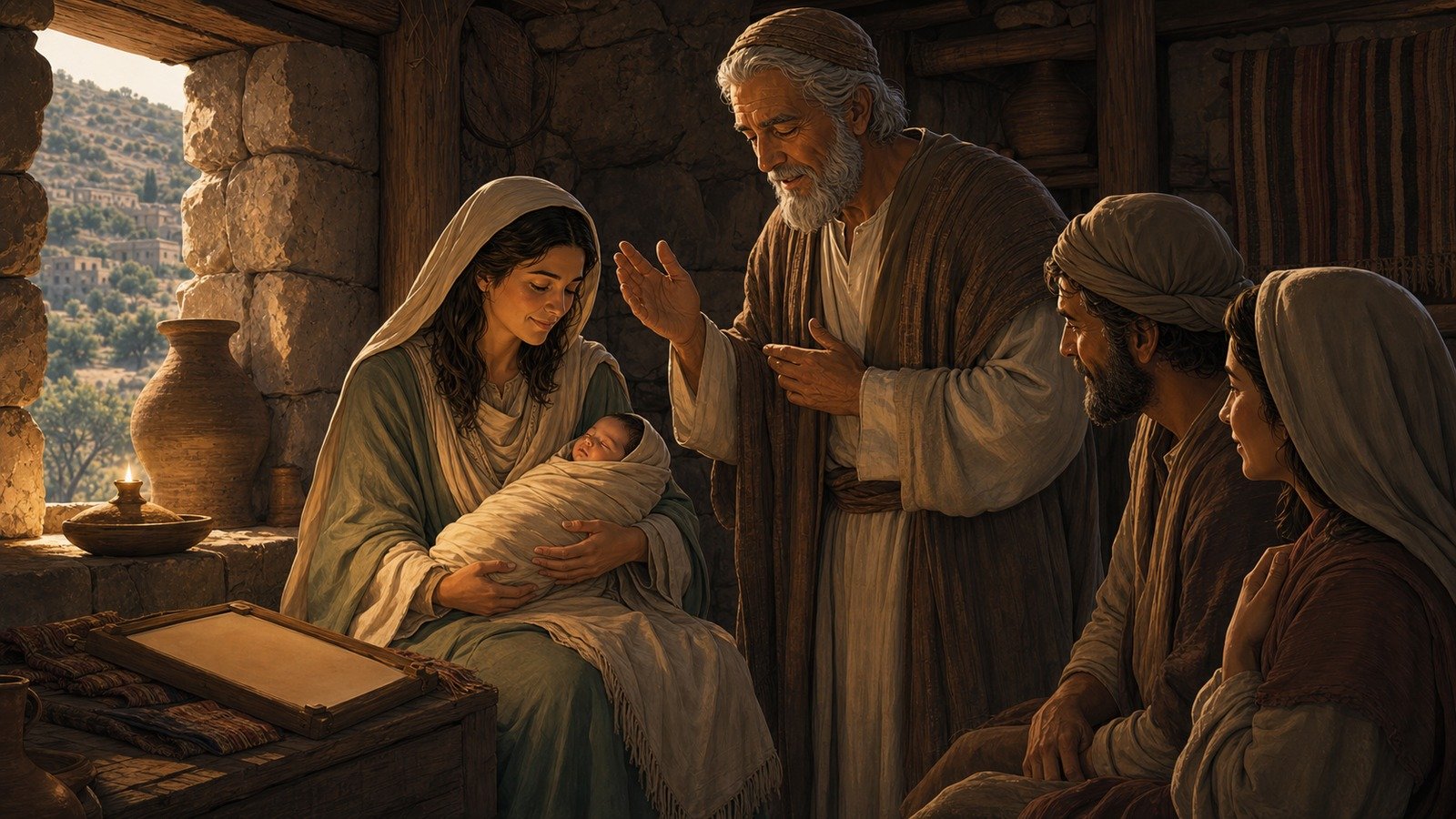
Elizabeth bears the promised son; Zechariah, insisting against family expectation that he be named John as Gabriel instructed, immediately regains his speech and prophesies over the child's future role preparing the way for the Messiah.
Further context
3 min readElizabeth gives birth to a son, and her neighbours and relatives share her joy, and the phrase used is that the Lord had shown her great mercy, which in that context means he had removed a disgrace she had carried for decades.
On the eighth day they come to circumcise the child, and the naming becomes a public dispute. They were going to name him after his father, which is what everyone expected, and his mother speaks up: no, he is to be called John. They point out that none of her relatives has that name, and then, rather than accept it, they make signs to his father to find out what he wants him called.
That detail is worth noticing. Zechariah had been unable to speak for nine months, and the neighbours are making signs at him, which suggests he was deaf as well as mute.
He asks for a writing tablet, and to everyone's astonishment writes: his name is John. Immediately his mouth is opened and his tongue set free, and he begins to speak, praising God.
The neighbours are filled with awe, and the news travels through the whole hill country of Judea, and everyone who hears it wonders what this child will turn out to be.
What Zechariah then says, after nine months of silence, is a second poem, known from its Latin opening as the Benedictus, and its structure is worth noticing because of what it puts first. Two thirds of it is about the coming deliverer, described in the language of the covenant with David and the oath sworn to Abraham, and about rescue from enemies so that the nation can serve without fear, in holiness and righteousness. Only after all of that does he turn to his own son: and you, my child, will be called a prophet of the Most High, for you will go on before the Lord to prepare the way for him.
The last lines change register entirely and are the ones most often quoted: because of the tender mercy of our God, by which the rising sun will come to us from heaven to shine on those living in darkness and in the shadow of death, to guide our feet into the path of peace.
One small thing in the naming dispute is easy to walk past. The mother announces the name and is overruled by the relatives, who go over her head to the father. She had been told nothing by an angel; her husband had been struck dumb before he could tell anyone anything, and had presumably written it down at some point in nine months. Either way she knew, and the room did not believe her until a man confirmed it in writing.
The child grows and becomes strong in spirit, and lives in the wilderness until he appears publicly to Israel, which is a gap of about thirty years covered in one sentence.
The naming is the scene. On the eighth day the relatives and neighbours come for the circumcision and assume the boy will be named after his father, and Elizabeth objects: no! He is to be called John.
They point out that no one in the family has that name, and then make signs to Zechariah, which suggests he was deaf as well as mute.
He asks for a writing tablet, a wooden board with a wax surface of the kind used across the Roman world, and writes: his name is John. And immediately his mouth was opened and his tongue set free, and he began to speak, praising God.
The neighbours' reaction is fear and gossip: all who heard this wondered about it, asking, what then is this child going to be?
The song Zechariah then sings, known from its Latin opening as the Benedictus, is almost entirely about the older promises being kept, and only four lines of it are about his own son.