

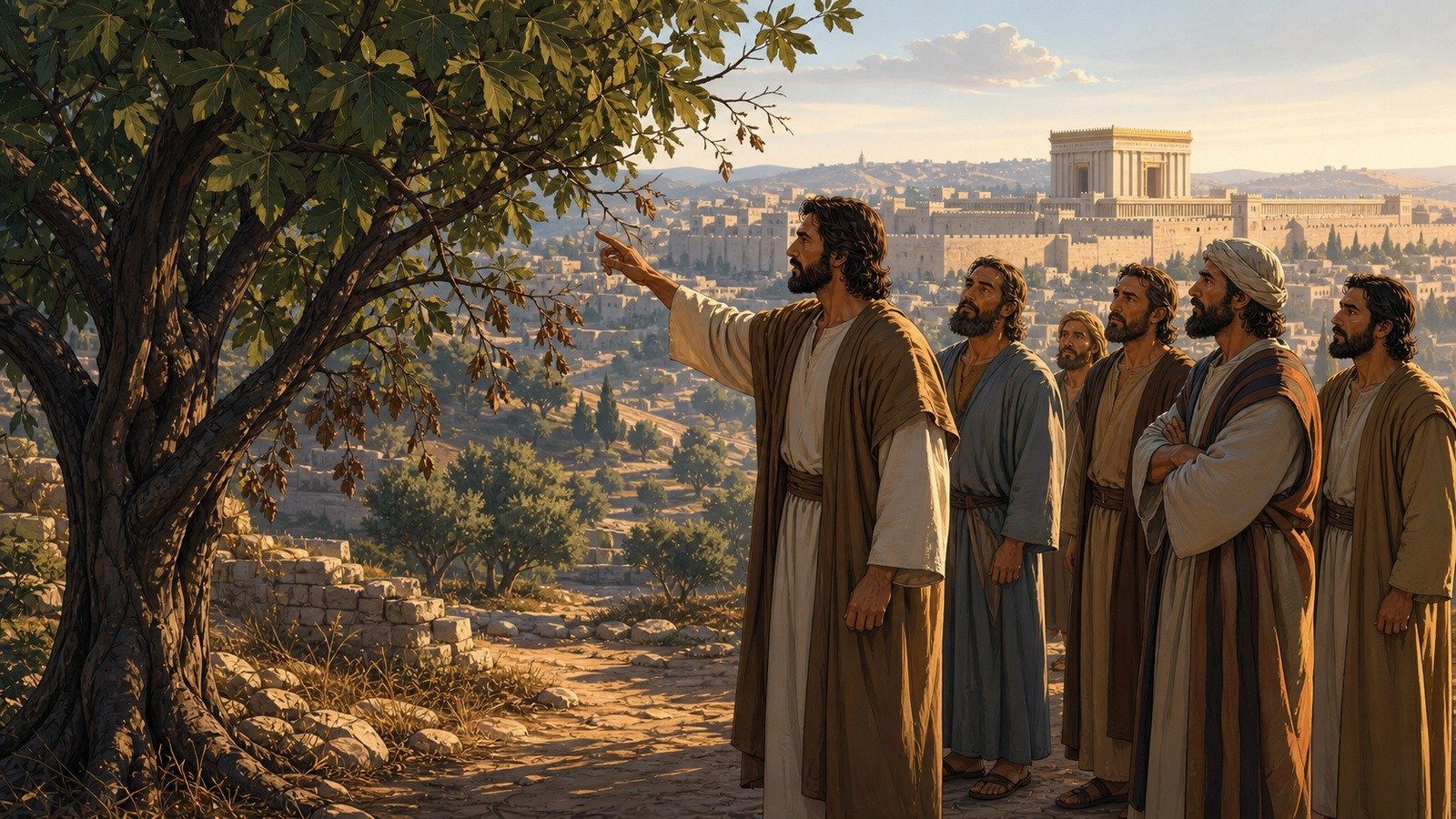
Jesus curses a fruitless fig tree as an acted-out warning about hollow religious appearance without substance; the disciples find it withered the next day, and Jesus uses the moment to teach on faith and forgiveness in prayer.
Further context
2 min readWalking into Jerusalem early in the morning, hungry, Jesus sees a fig tree in leaf at a distance and goes to find fruit on it. There is none, and the sentence that follows is the one everybody stops at: it was not the season for figs.
Cursing a tree for failing to do what the calendar had not yet asked of it looks arbitrary, and the objection is fair enough to need answering properly.
Figs in that country work in a way that makes the episode intelligible. The tree produces small early fruit, called paggim, at about the same time the leaves appear in spring, and those unripe figs were eaten by the poor and by travellers. The main crop ripens months later. A fig tree in full leaf in the week before Passover was advertising early fruit, and this one had leaves and nothing under them. The main harvest was indeed months away; the breakfast a traveller could reasonably expect was not.
May no one ever eat fruit from you again, he says, and the disciples hear it.
The next morning, walking the same road, Peter notices the tree withered from the roots.
What the action means is never spelled out, and the arrangement of events supplies most of it. Between the cursing and the withering, he clears the temple courts. A display of foliage with nothing beneath it, condemned on the way into the city, brackets a visit to an institution running at enormous scale and producing, by his assessment of it, nothing.
Prophets had done this kind of thing for centuries. Jeremiah smashed a clay jar in front of the elders, Ezekiel lay on his side for months and cooked over dung, Isaiah walked stripped and barefoot for three years. An acted sign was a recognised form of speech, and Israel had been compared to a fig tree before, by more than one prophet, usually at the point of judgement.
The teaching drawn out of it afterwards is about prayer rather than about trees. Have faith in God. If anyone says to this mountain, go, throw yourself into the sea, and does not doubt in their heart but believes that what they say will happen, it will be done for them.
The mountain is worth noticing. He is standing on the road between Bethany and Jerusalem, in sight of the Mount of Olives, and behind it the temple mount itself, which had been raised and extended by Herod's engineers into an artificial platform.
Then a condition attached to the promise: when you stand praying, if you hold anything against anyone, forgive them.
Whether the tree was destroyed or simply stopped bearing has been read both ways from the wording, and the difference matters less than what the disciples took from it, which was the speed of the thing rather than its botany.
It is the only destructive miracle attributed to him anywhere. Everything else recorded restores something: sight, hearing, movement, life, wine at a wedding, bread for a hillside. That this one exception is performed on a tree rather than a person is worth registering before drawing conclusions from it.