

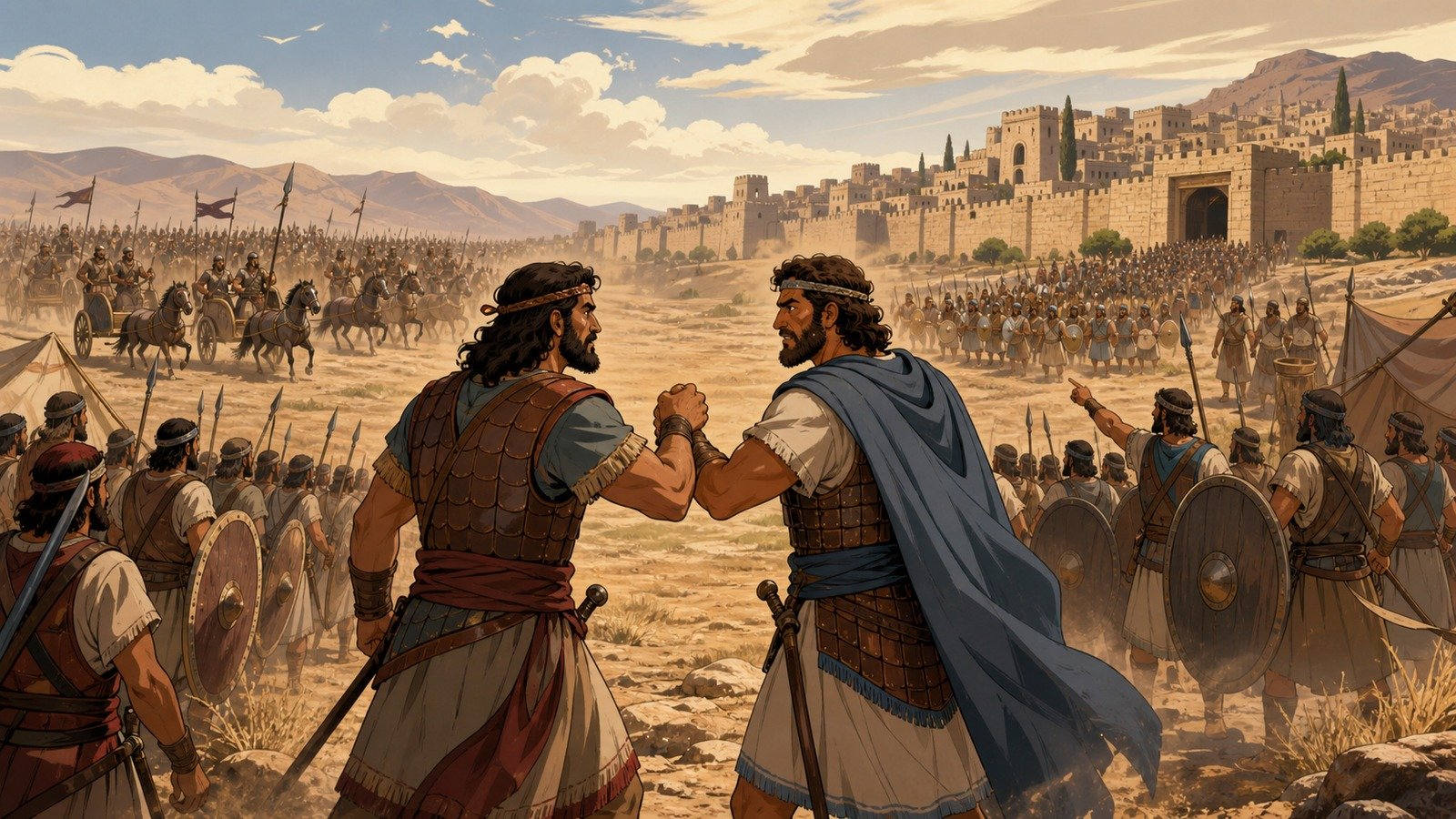
Ammon humiliates David's diplomatic envoys and then hires Aramean mercenaries against Israel; David's forces under Joab and Abishai defeat the combined coalition, further securing the kingdom's borders.
Further context
2 min readThe war starts with a diplomatic mission and an insult. Nahash king of Ammon dies, and David sends a delegation to express sympathy to his son Hanun, saying he will show kindness to him as his father showed kindness to me. What that kindness was is unknown; the same Nahash had besieged Jabesh Gilead at the start of Saul's reign, and something must have passed between him and David during the years when both were Saul's enemies.
Hanun's advisers persuade him that the delegation is a reconnaissance party. He has the envoys seized, shaves off half of each man's beard, cuts off their garments at the buttocks and sends them away.
In a society where a beard was a mark of adult standing, that is a calculated humiliation designed to be seen. David tells them to stay at Jericho until their beards have grown back, which is a small piece of consideration in the middle of a diplomatic disaster.
The Ammonites understand what they have done and hire twenty thousand Aramean foot soldiers from Beth Rehob and Zobah, along with the king of Maakah and men from Tob. Joab arrives to find himself facing battle lines in front and behind, with the Ammonites at the city gate and the Arameans in the open country.
His response is the best piece of field command anywhere in these books. He divides the army, takes the best troops against the Arameans himself, gives the rest to his brother Abishai to face the Ammonites, and sets a mutual support arrangement: if the Arameans are too strong for me, you come to my rescue; if the Ammonites are too strong for you, I will come to yours. Then he says the sentence that has outlasted the battle: be strong, and let us fight bravely for our people and the cities of our God. The LORD will do what is good in his sight.
The Arameans break, the Ammonites see it and retreat into the city, and Joab goes home.
Hadadezer then brings Arameans from beyond the Euphrates, and this time David takes the field personally and defeats them so thoroughly that the Aramean vassal kings make peace with Israel and become subject to it, and refuse to help the Ammonites again.
Joab's siege of Rabbah ends with a piece of political theatre worth noticing. When the city is about to fall he sends for David to come and take command of the final assault, so that the city will be called by the king's name and not by his own. A commander who has spent his career acquiring power by force declines the credit for a capture, and the request reads as either loyalty or a calculated refusal to be seen outshining a king who has not left the palace.
The following spring the army goes out to besiege the Ammonite capital, and the king stays in Jerusalem. That one sentence is the setup for everything that follows.