

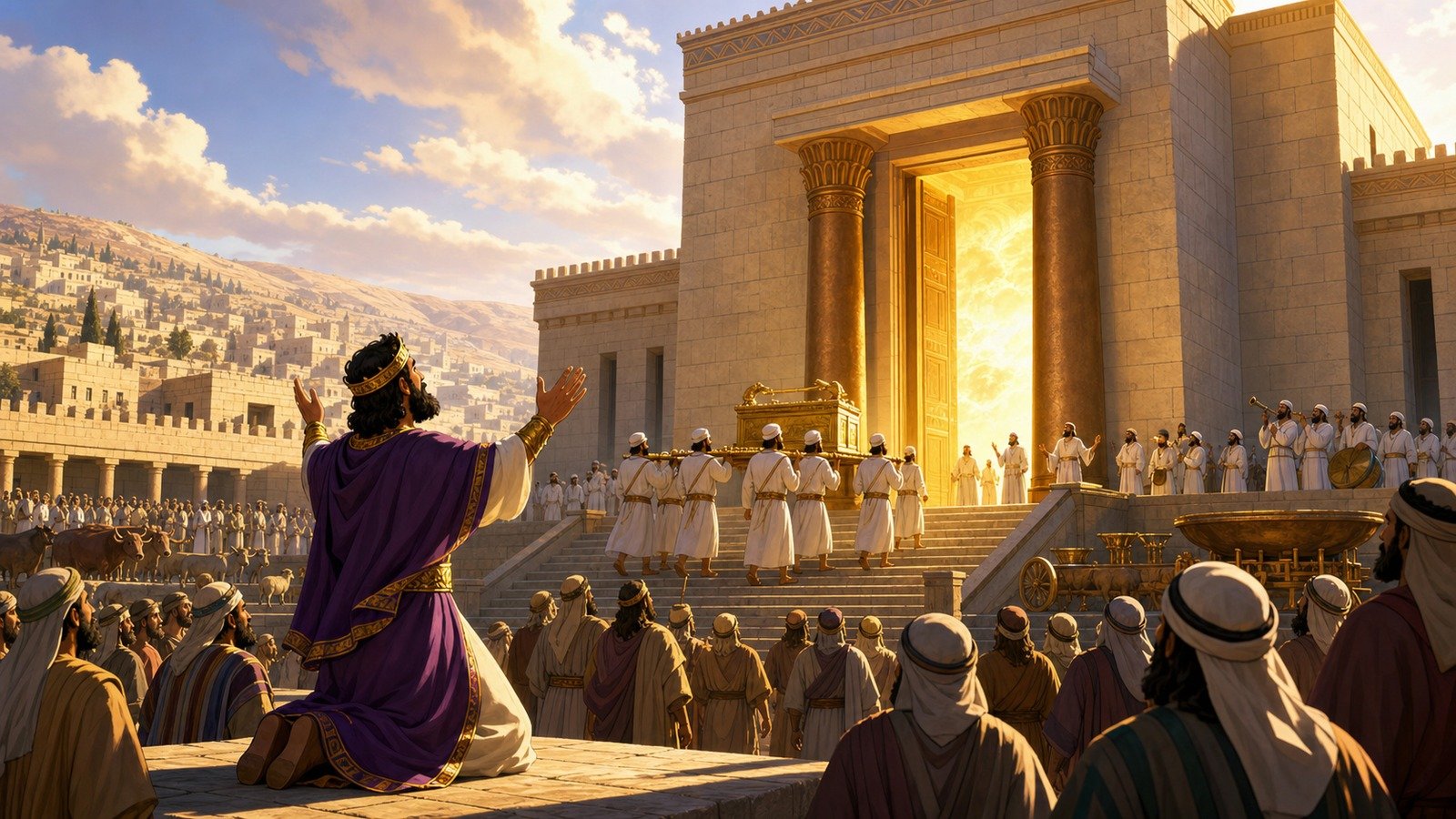
Solomon dedicates the completed Temple with the ark installed in the Most Holy Place, a lengthy public prayer of dedication, and sacrifices so numerous they could not be counted, as the glory of the Lord fills the building.
Further context
2 min readThe ark is brought up from the City of David, and the detail given about its contents matters: there was nothing in it except the two stone tablets that Moses had placed there at Horeb. The jar of manna and the budded staff, which had been in it in the wilderness, are gone. What is left is the covenant document.
When the priests withdraw, a cloud fills the temple so that they cannot perform their service, which is exactly what happened when the tent was finished four centuries earlier and Moses could not enter it.
Solomon's prayer is the longest recorded prayer in the Hebrew scriptures and its argument is not what a dedication speech would be expected to say. He begins by conceding that the building cannot do what buildings are for. Will God really dwell on earth? The heavens, even the highest heaven, cannot contain you. How much less this temple I have built!
What he asks for instead is that it function as an address rather than a residence. May your eyes be open towards this temple night and day, this place of which you said, my Name shall be there.
He then works through seven situations in which someone might pray towards it, and the list is unexpected. A man wronged by his neighbour. A defeat in war caused by sin. Drought. Famine, plague, blight, mildew, locusts or a siege. And then a case nobody would expect a national dedication to include: the foreigner who comes from a distant land because of your name, who prays towards this house. Do whatever the foreigner asks of you, so that all the peoples of the earth may know your name and fear you.
The seventh is the one that reads as though written after the fact, and probably was: when they sin against you and you become angry and give them over to the enemy who takes them captive to a land far away, and they have a change of heart and pray towards this place, hear from heaven and forgive.
The pattern running through all seven is the same: when the disaster comes, and it will, this is where to face.
One thing the building changes is not obvious from the ceremony. Worship had been portable for four centuries, carried on poles by men who could set it down anywhere. Fixing it to one hill in one city gives the monarchy something no Israelite king had before: a permanent religious centre inside his own capital, staffed by a priesthood he appoints. The advantages are considerable and so is the risk, and the prophets spend the following centuries attacking people who assume that having the building means the arrangement cannot fail.
The festival lasts fourteen days and the sacrifices are enormous, and the people go home joyful and glad in heart.
The building stands for around four centuries and is burned by the Babylonians in 587 BC, having been looted several times before that by Egyptian, Aramean and Assyrian pressure and by Judah's own kings paying tribute out of it.