

On arrival, Ezra is confronted with widespread intermarriage between returned exiles and surrounding peoples; he leads the community in public confession and a controversial reform requiring these marriages be dissolved.
Further context
3 min readShortly after Ezra arrives, officials come to him with a report: the people, the priests and the Levites have not kept themselves separate from the neighbouring peoples with their detestable practices, and have taken some of their daughters as wives for themselves and their sons. And they add the detail that makes it a governance problem rather than a private one: the leaders and officials have led the way in this unfaithfulness.
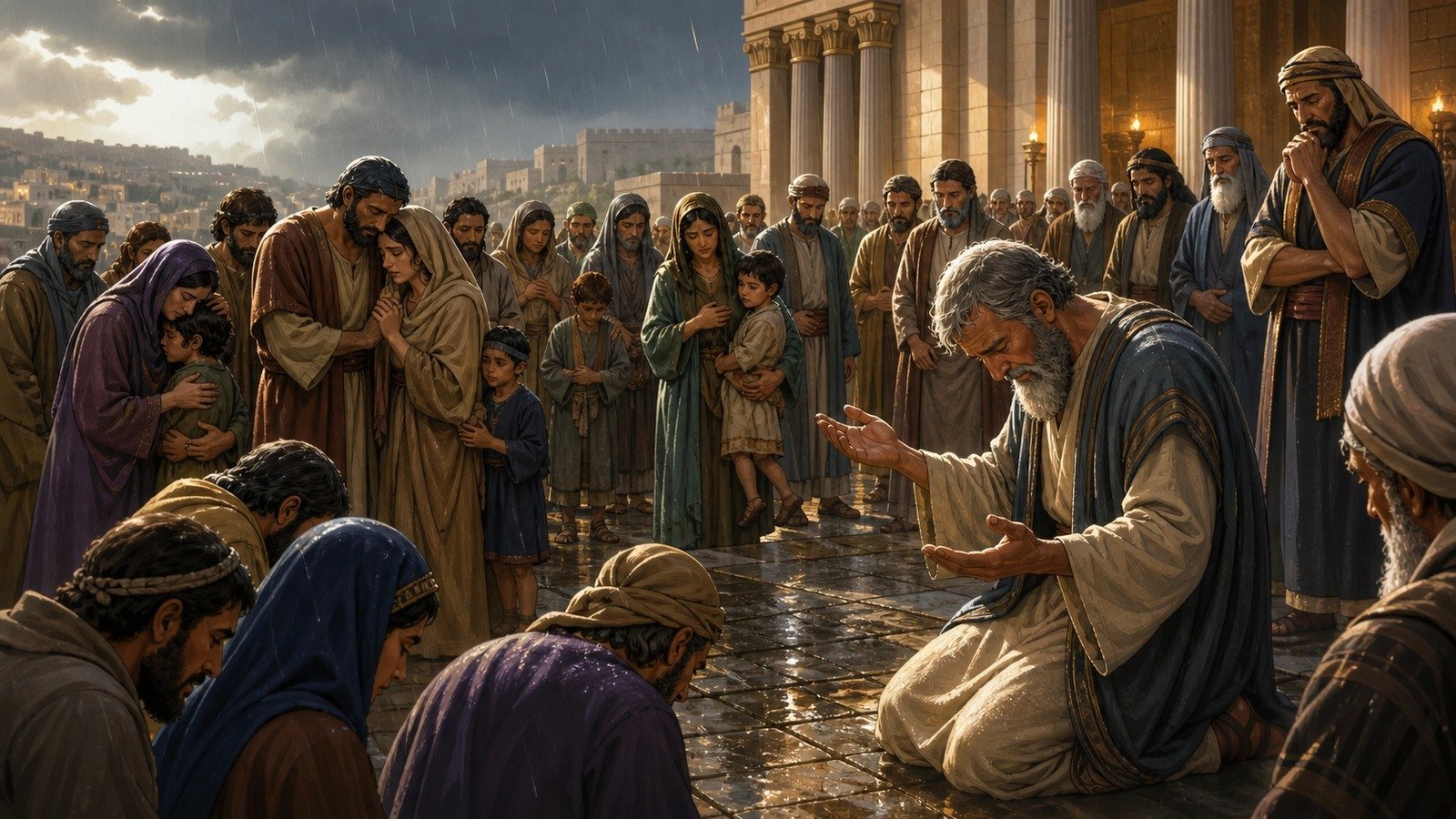
His reaction is physical and public. He tears his tunic and cloak, pulls hair from his head and beard and sits appalled until the evening sacrifice, and then falls on his knees with his hands spread out and prays a confession that never once uses the word you about anyone else. I am too ashamed and disgraced to lift up my face to you, because our sins are higher than our heads and our guilt has reached to the heavens.
A crowd gathers around him weeping, and the proposal comes from them rather than from him. Shekaniah suggests a covenant to send away the foreign wives and their children, in accordance with the law, and says: rise up, this matter is in your hands. We will support you, so take courage and do it.
An assembly is called within three days, in the rain, in the ninth month, and the men sit in the open square in front of the temple distressed by the occasion and by the weather. A commission is appointed to examine the cases individually over three months, and a list of the men involved is recorded by name, about a hundred and eleven of them, including seventeen priests.
What actually happened to the women and children is unknown, and it is the hardest thing in the book. Some of the men are recorded as having children by these marriages. Nothing describes where they went, who supported them, or whether any provision was made.
The reasoning behind the policy is not ethnic and this needs saying plainly, because it reads that way and has been used that way. Rahab, Ruth and others had married into Israel without difficulty; what is objected to throughout is the religion, and the same books that record this also record that some of the returnees' children could not speak the language of Judah. A community of a few tens of thousands, surrounded and intermarrying at the level of its own leadership, was two generations from disappearing as anything distinct.
One thing about his method is consistent and it is worth naming. He does not issue an order. He fasts, confesses in public using the first person plural, and waits until somebody else proposes the remedy, and then acts on a proposal that came from the assembly. A man carrying imperial authority to appoint judges and enforce the law chooses to obtain consent first.
The measure is severe, it is recorded without softening, and a few men are noted as having opposed it.
The problem reported is that the people, including priests and Levites, had married women from the surrounding peoples, and that the leaders and officials had led the way in this unfaithfulness.
Ezra's reaction is physical and public: he tears his tunic and cloak, pulls hair from his head and beard, and sits appalled until the evening sacrifice, and then prays a confession in the first person plural that never once uses the word they.
The objection is not ethnic in the modern sense. The concern stated throughout is religious assimilation, and the same law that prohibits these marriages provides for foreigners joining Israel, which is how Ruth the Moabite ends up as David's great-grandmother.
The remedy adopted is the sending away of the wives and the children born to them. It is recorded, the men involved are named, and nothing is said about what happened to the women afterwards.