

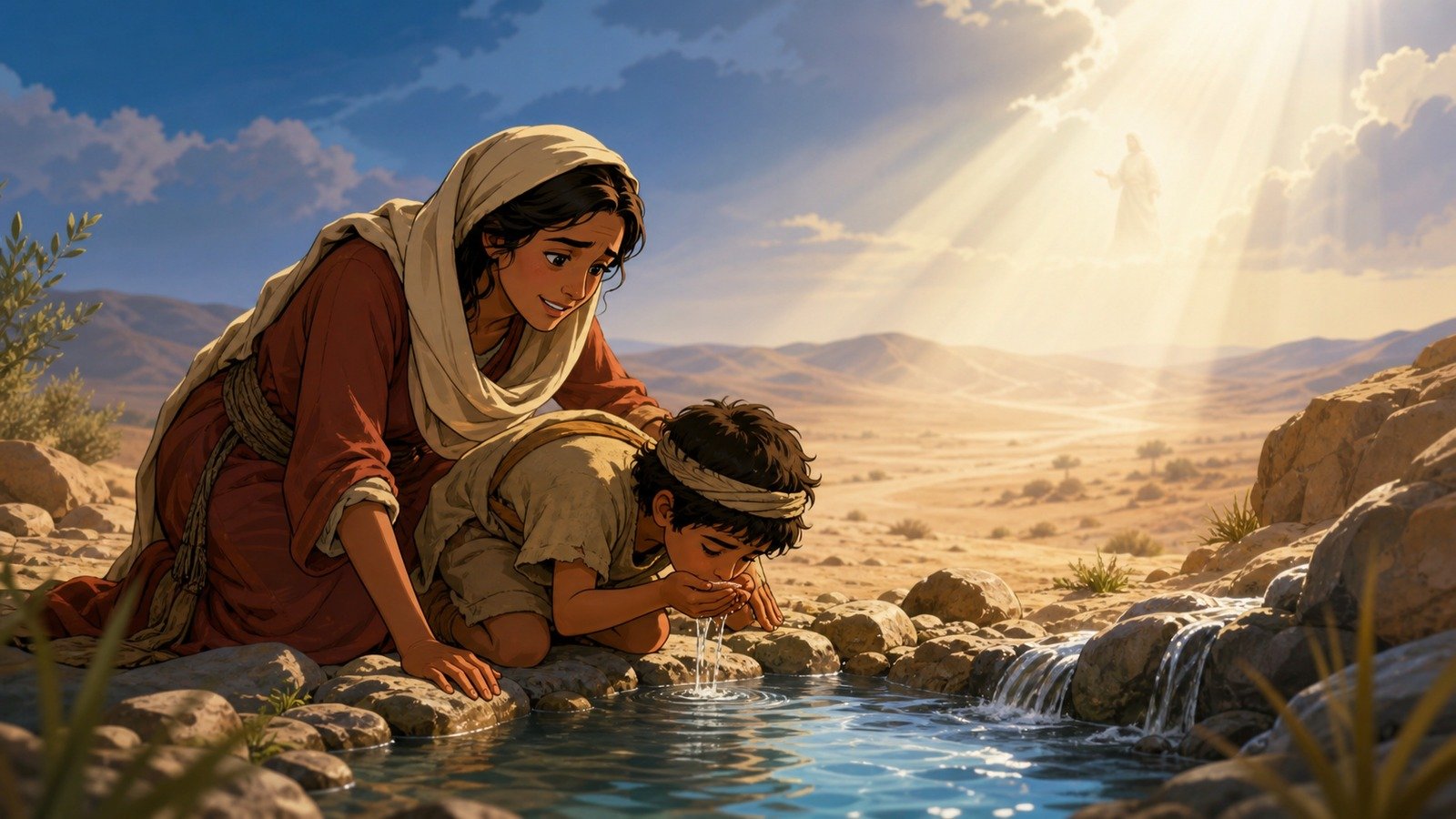
After Isaac is weaned, Sarah insists that Hagar and Ishmael be sent away so Ishmael will not share Isaac's inheritance. God provides for them in the wilderness and promises Ishmael will also become a great nation.
Further context
2 min readThe occasion is a feast held on the day Isaac is weaned, which in that society happened at around two or three years old and was worth marking because it meant the child had survived the most dangerous stretch of infancy. Ishmael, born fourteen years earlier, would be about sixteen or seventeen.
Sarah sees him doing something described with a single Hebrew participle (metsacheq), and the word is genuinely ambiguous. It comes from the same root as Isaac's name and can mean laughing, playing, joking or mocking. English versions choose between them, and the choice changes the scene completely. Paul reads it as persecution, which is one defensible reading of an ambiguous word rather than a translation the Hebrew forces.
Sarah demands that the slave woman and her son be sent away, and she states her reason in property terms: that son will never share in the inheritance with Isaac. Abraham is greatly distressed, because Ishmael is his son.
The legal background matters here as it did earlier. Mesopotamian law addressed the status of children born to a slave by the head of a household, including when such children could be freed and whether they inherited alongside the sons of the wife. Sarah is invoking a recognised legal question. Abraham's distress is about a boy, not about a rule.
The instruction he receives does two things at once. He is told to listen to Sarah, because it is through Isaac that his offspring will be reckoned. He is also told that the son of the slave will be made into a nation, because he too is Abraham's offspring. The promise is not withdrawn from Ishmael; it is separated from the covenant line.
He sends them off early in the morning with bread and a skin of water, and what follows is among the bleakest scenes in the patriarchal story. Hagar wanders in the Desert of Beersheba, the water runs out, and she puts the boy under a bush and sits about a bowshot away, saying she cannot watch him die. Then she begins to sob.
The geography explains the severity. The Desert of Beersheba lies at the southern limit of settled agriculture, where rainfall drops below what will support a crop, and beyond it the Negev becomes true desert. Water there comes from wells and seasonal channels invisible to anyone who does not know where they are, which is why what happens next turns on her eyes being opened to a well rather than on a well appearing. Sending a woman and a teenage boy into that country with one skin of water was not banishment to an inconvenience.
The sentence that turns the scene is precise about who is heard: God heard the boy crying. Ishmael's name means God hears, and it was given for that reason at his birth.
He grows up in the Desert of Paran in the Sinai, becomes an archer, and his mother finds him a wife from Egypt, her own country. The son sent away from the family of promise is not abandoned by the God of that family, and that is said in as many words.