

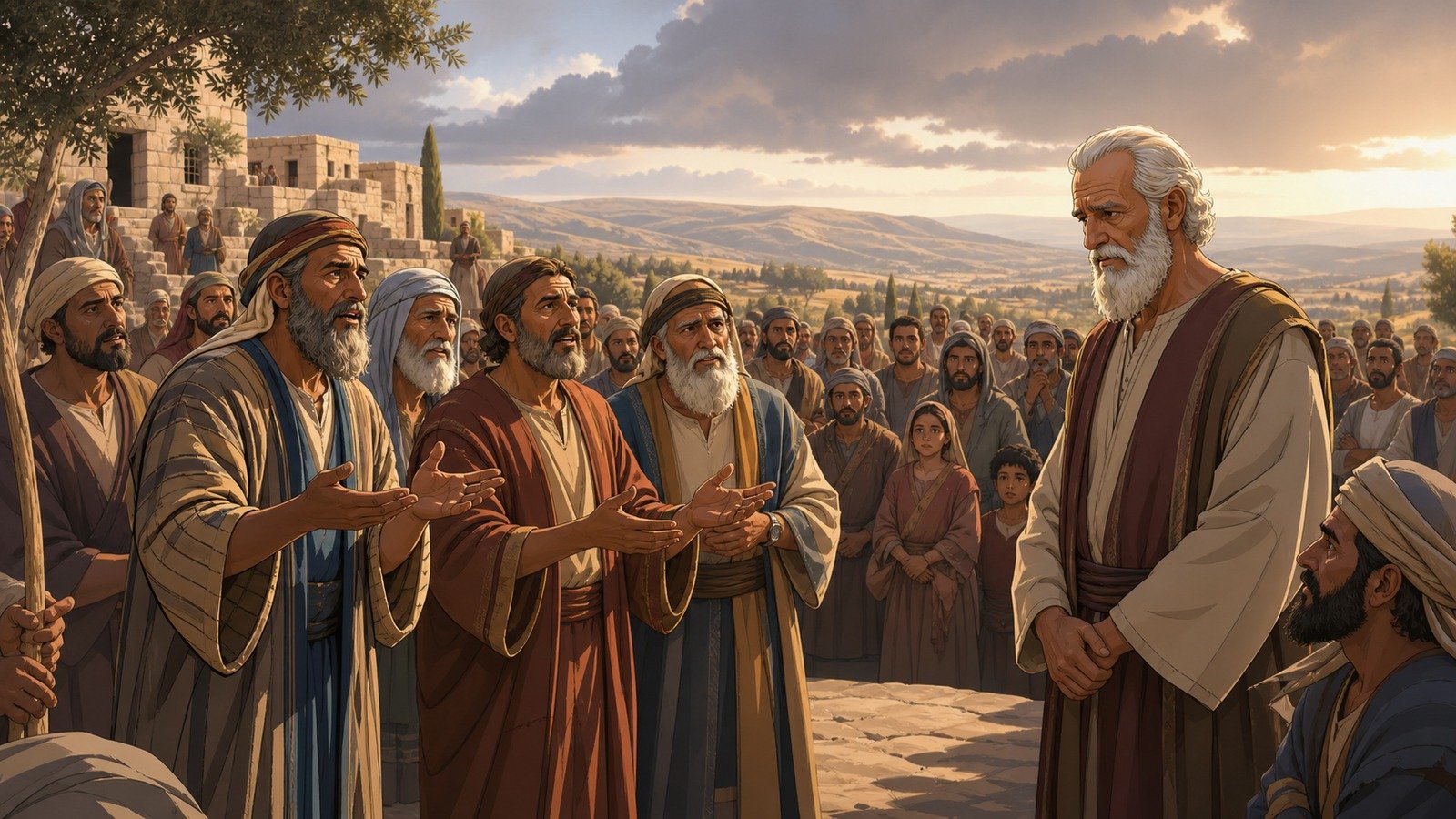
Ageing and with corrupt sons, Samuel is asked by Israel's elders for a king "such as all the other nations have." God tells Samuel this is a rejection of his own kingship, but instructs him to grant the request while warning the people what a king will cost them.
Further context
2 min readSamuel is old and his sons are taking bribes and perverting justice at Beersheba, which is where the elders start. They come to him at Ramah and make a request that is short and carefully worded: you are old, and your sons do not follow your ways; now appoint a king to lead us, such as all the other nations have.
The last five words are the problem. What is being asked for is not competent government but the same institution everyone else has, and Samuel is displeased.
What he is told in reply is unexpected. It is not you they have rejected, but me as their king. Since the day I brought them up out of Egypt they have been doing this, forsaking me and serving other gods. Listen to them, but warn them solemnly and let them know what the king who will reign over them will claim as his rights.
The warning that follows is a list, and it is worth having in full because everything in it happens. He will take your sons and make them serve with his chariots and horses and run in front of them. He will assign some to plough his ground and reap his harvest and make weapons of war. He will take your daughters to be perfumers, cooks and bakers. He will take the best of your fields, vineyards and olive groves and give them to his attendants. He will take a tenth of your grain and your vintage. He will take your male and female servants, the best of your cattle and donkeys. He will take a tenth of your flocks. And you yourselves will become his slaves.
The verb take runs through it six times. What is being described is a professional standing army, a court, a palace establishment and a taxation system, which is exactly what a monarchy requires and exactly what a confederation of tribes did not have. Within two generations Solomon is running forced labour gangs and the northern tribes revolt over the burden.
The last line of the warning is the sharpest: when that day comes, you will cry out for relief from the king you have chosen, and the LORD will not answer you in that day.
Two things about the request are easy to miss. The elders are not asking for a change of religion; they want a king in addition to everything they already have, which is why the response frames it as a rejection rather than a rebellion. And they are asking for something the law had already anticipated: instructions for a future king had been given generations earlier, limiting his horses, his wives and his treasury and requiring him to write out a copy of the law for himself. What is objected to is not the office but the reason given for wanting it.
They refuse to listen. No, they say, we want a king over us. Then we will be like all the other nations, with a king to lead us and to go out before us and fight our battles.
Samuel is told to give them what they want.