

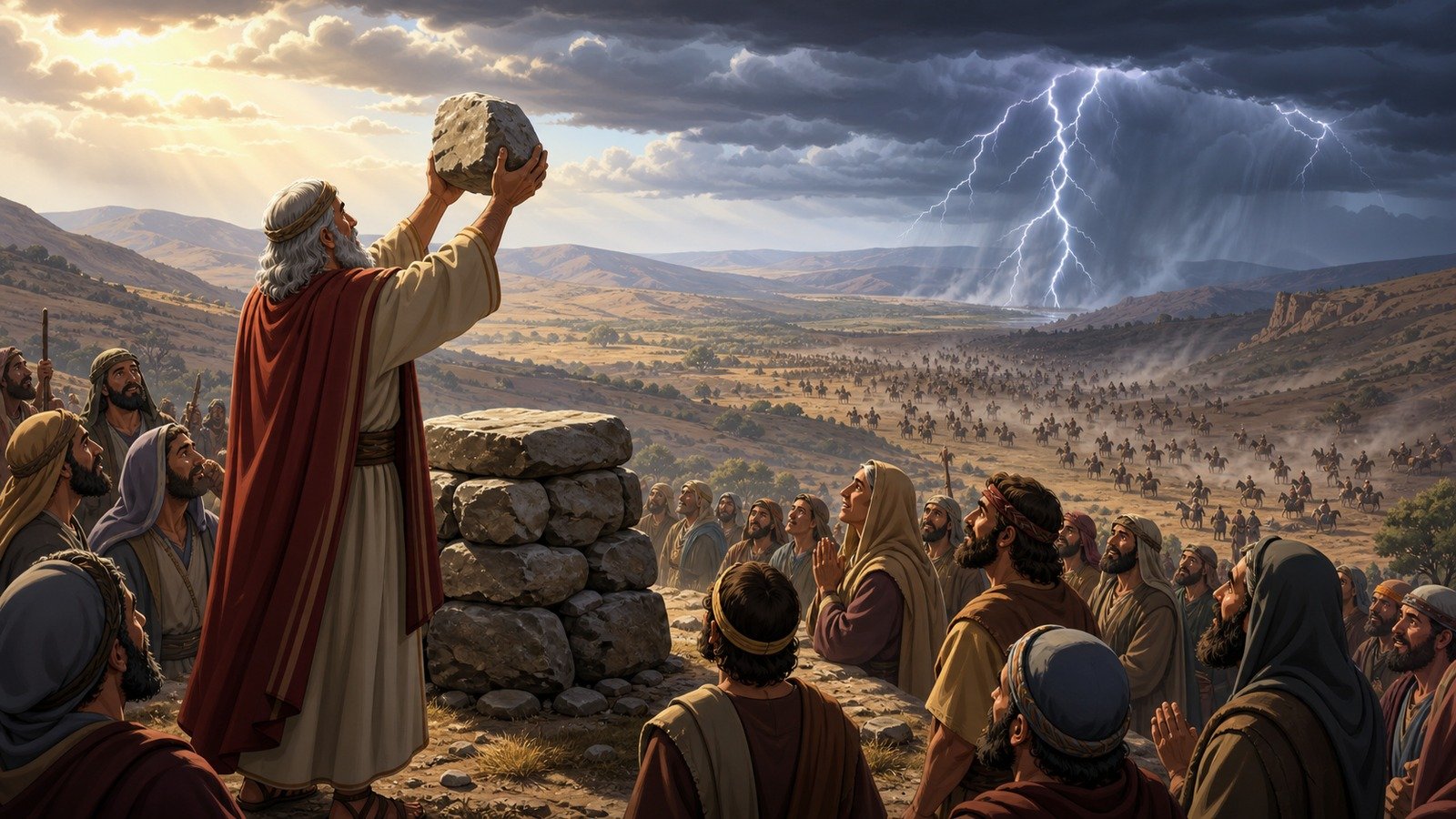
Samuel calls Israel to put away foreign gods and leads a national gathering at Mizpah; God routs the attacking Philistines with thunder, and Samuel sets up a memorial stone, "Ebenezer" ("stone of help"), marking two decades of subsequent peace.
Further context
2 min readTwenty years pass with the ark in a house at Kiriath Jearim, and the whole nation is described as mourning and seeking after the LORD. Samuel finally addresses them, and what he asks for is not a religious ceremony but a decision: if you are returning to the LORD with all your hearts, then rid yourselves of the foreign gods and the Ashtoreths and commit yourselves to him and serve him only.
They put away their Baals and Ashtoreths, which is the plainest possible statement that Israelite households had been keeping both alongside their own religion for generations.
He gathers them at Mizpah, and they draw water and pour it out before the LORD, fast, and confess. The water ritual appears nowhere else and what it meant is unknown, though pouring out water has been read as an image of emptying oneself or of contrition.
The Philistines hear that the whole nation is assembled in one place and see an opportunity, and their army moves up. The Israelites are terrified and ask Samuel not to stop crying out for them, and he offers a suckling lamb as a whole burnt offering. While he is doing it, the Philistines draw up for battle, and thunder breaks over them so loudly that they panic and are routed. The Israelites chase them down and the towns taken from Israel are recovered.
Samuel sets up a stone between Mizpah and Shen and calls it Ebenezer, meaning stone of help, saying, thus far the LORD has helped us.
The name is worth pausing on because it is the same one attached to the disaster twenty years earlier, when the army camped at Ebenezer and lost the ark. The place of the worst defeat becomes the marker for the recovery.
He judges Israel for the rest of his life, going on a circuit year by year from Bethel to Gilgal to Mizpah and back to Ramah, where his home was and where he had built an altar. That circuit is a functioning national administration of a kind the country has not had before, run by one man on foot.
The twenty years of waiting are easy to skip past and they are the substance of his early career. The ark is in a private house, the sanctuary at Shiloh is destroyed, the priesthood that ran it is dead, and the nation has no centre of any kind. What he did in that period is unknown. What is recorded is that at the end of it the whole country was ready to listen to one man tell it to throw away its gods, which is not something that happens without groundwork.
What he never does is fight. Every other figure of the previous three centuries delivered Israel with a weapon, and the deliverance here comes while he is offering a lamb.
His sons are appointed as judges in Beersheba and turn out badly, taking bribes and perverting justice, and that failure is what the elders will shortly use as the reason for demanding a king.