

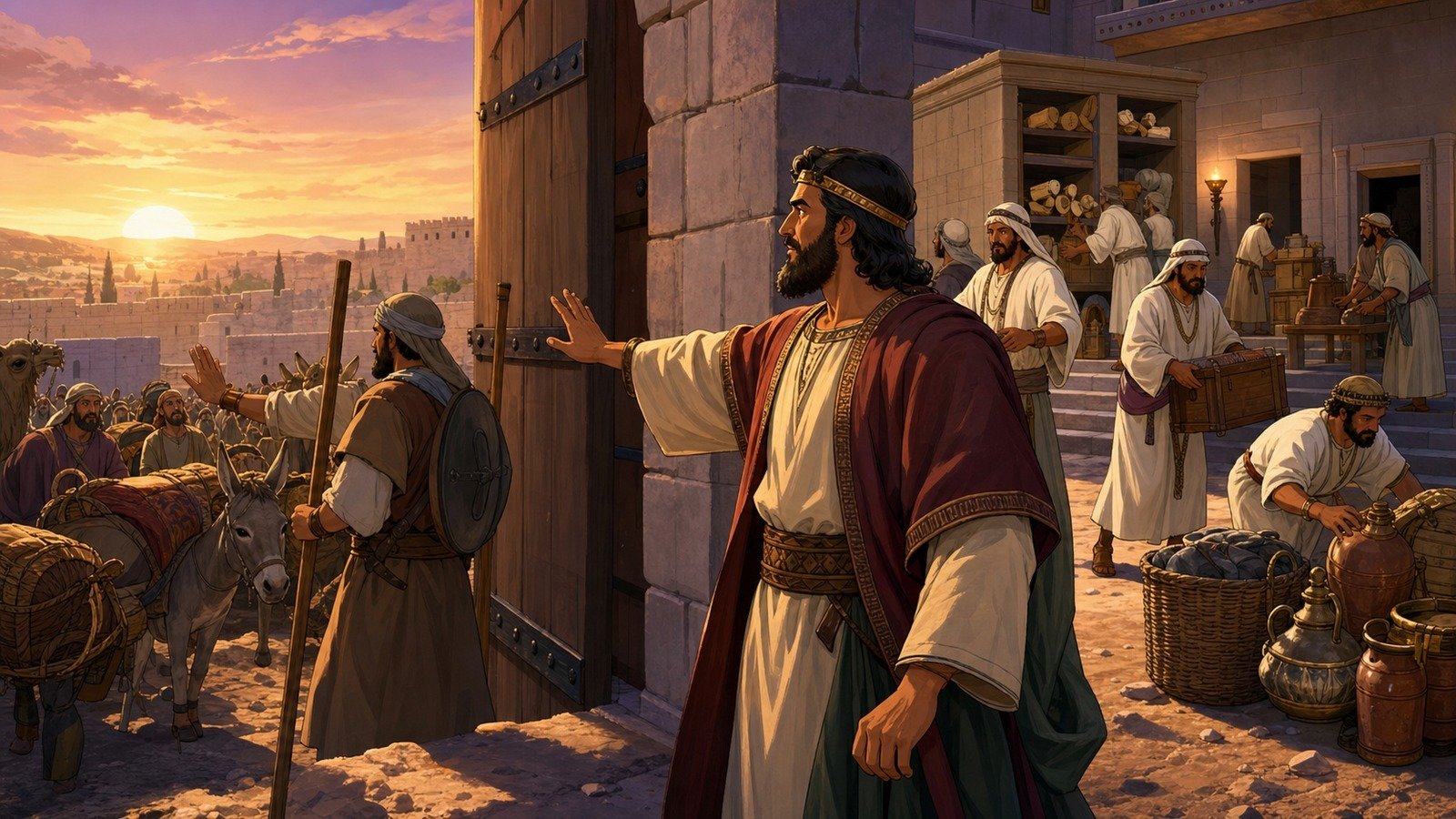
After a period back in Persia, Nehemiah returns to Jerusalem to find earlier reforms neglected, Temple provisions misused, Sabbath trading resumed and intermarriage widespread again, and takes decisive, sometimes forceful, action to correct it.
Further context
3 min readNehemiah had gone back to Persia after twelve years as governor, and some time later he asks the king for permission to return to Jerusalem. What he finds when he arrives is that the written agreement everyone had sealed has broken down on every clause.
Eliashib the priest, who had charge of the storerooms, had provided Tobiah the Ammonite with a large room in the temple courts, the room where the grain offerings, incense, temple articles, tithes and contributions for the Levites, singers and gatekeepers had been kept. Tobiah is the man who had spent years trying to stop the wall being built. His furniture is now in the storeroom.
The response is immediate and physical: I was greatly displeased and threw all Tobiah's household goods out of the room. Then he orders the rooms purified and puts the equipment and the offerings back.
The tithes had stopped, so the Levites and singers had gone back to their fields, which is why the storerooms were empty enough to convert. He rebukes the officials with a single question, why is the house of God neglected, and reinstates the collection, appointing four men as trustees over the stores because they were considered trustworthy.
Then the Sabbath. People are treading winepresses on it, bringing in grain, loading donkeys with wine, grapes, figs and other loads, and Tyrian merchants living in the city are selling fish. He orders the gates shut at dusk before the Sabbath and not opened until it is over, and posts his own men on them. When traders camp outside the wall twice, he tells them that if they do it again he will arrest them, and they stop coming.
Then the intermarriage, and here his method is different from Ezra's. Ezra tore his own hair out and confessed in the first person plural and waited for the assembly to propose a remedy. Nehemiah rebukes them, calls curses down on them, beats some of them, pulls out their hair and makes them take an oath. He also notes that half their children spoke the language of Ashdod and could not speak the language of Judah.
A grandson of the high priest had married the daughter of Sanballat, the governor of Samaria and the other principal opponent of the wall, and Nehemiah drives him away.
The two reformers are worth setting side by side, because they arrive within a generation of each other and work in opposite ways. Ezra is a priest and a scholar with imperial authority to appoint judges, and he operates by public confession and waits for the assembly to propose the remedy. Nehemiah is a courtier and a governor, and he operates by decree, by physical force and by posting guards on gates. Between them they produce a community that survives.
The book ends four times with the same short prayer, and the last instance is the last line: remember me with favour, my God.
What he finds on his return is set out item by item, and each item is a specific promise broken.
Eliashib the priest had provided Tobiah, one of the men who had opposed the wall, with a large room inside the temple courts that had been used to store grain, incense and the temple articles. Nehemiah throws his household goods out into the street and orders the rooms purified.
The Levites had not been given their portions and had gone back to their fields, so the temple service had stopped for lack of staff.
People were treading winepresses on the Sabbath, bringing in grain, wine, grapes and figs, and men from Tyre were selling fish in Jerusalem on the day. His remedy is to shut the gates at dusk on the eve of the Sabbath and post his own men on them, and when traders camp outside the wall he threatens to arrest them.
He is, on his own account, a difficult man, and he says so without embarrassment.