

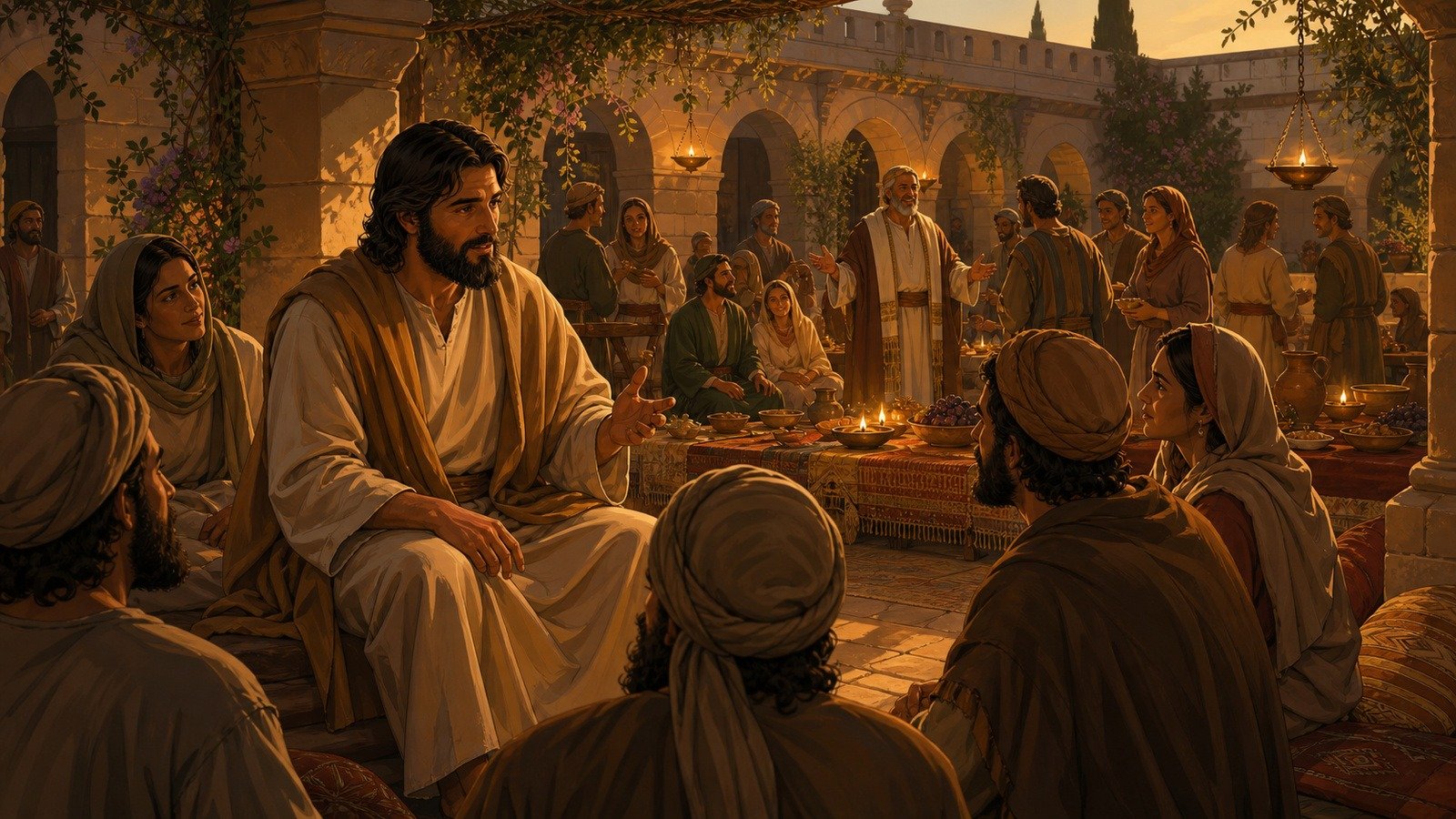
Jesus tells of a king's wedding banquet whose invited guests refuse to attend, so the invitation is thrown open to anyone who can be found, a parable of the kingdom's unexpected guest list and of the need to be properly prepared regardless.
Further context
2 min readA king prepares a wedding banquet for his son and sends servants to those who had been invited, and they will not come.
The double invitation is not a detail invented for the story. In that world a guest was invited well in advance and then summoned again when the food was ready, since a household preparing meat for a large party needed to know its numbers and could not simply reheat what was left. Accepting the first invitation and refusing the second was a calculated insult, and refusing a king's was worse.
A second group of servants is sent with details designed to make the refusal harder: my oxen and fattened cattle have been slaughtered, and everything is ready.
The responses divide into two kinds. Some pay no attention and go off, one to his field, another to his business. The rest seize the servants, mistreat them and kill them.
That second reaction is disproportionate to the invitation and is the point at which the story stops being about catering. Killing a king's messengers is rebellion, and the king's response is the response of a state: he sends his army, destroys those murderers and burns their city.
Readers have long noticed that a burned city sits oddly inside a story about a dinner, and that Jerusalem was burned by Roman troops within forty years of the telling. Whether that clause reflects the event or anticipates it is disputed, and the argument turns largely on when Matthew was written.
The invitation is then thrown open. Go to the street corners and invite to the banquet anyone you find. The servants gather all they could find, the bad as well as the good, and the wedding hall is filled with guests.
Then a second movement that catches most readers by surprise. The king comes in to see the guests and notices a man not wearing wedding clothes, and asks how he got in without them. The man is speechless, and is thrown outside.
The severity of that has bothered people for centuries, and the usual explanation, that the host provided garments and this man had refused one, has no direct evidence behind it in the sources of the period. What can be said is that the story does not end with the doors thrown open. Being brought in off the street is not the last word about anyone in it.
For many are invited, but few are chosen.
A shorter version of the story appears elsewhere without the king, the army, the burned city or the wedding garment: a man simply gives a large banquet, the invited guests make excuses about a field, some oxen and a new wife, and the servants are sent into the streets and lanes. Whether that is the same parable told differently or a second telling of a familiar theme is impossible to settle, and travelling teachers reused their material constantly.
What both versions share is the excuse-making, and the excuses in the shorter one are all reasonable. Nobody in either story refuses because they dislike the host.