

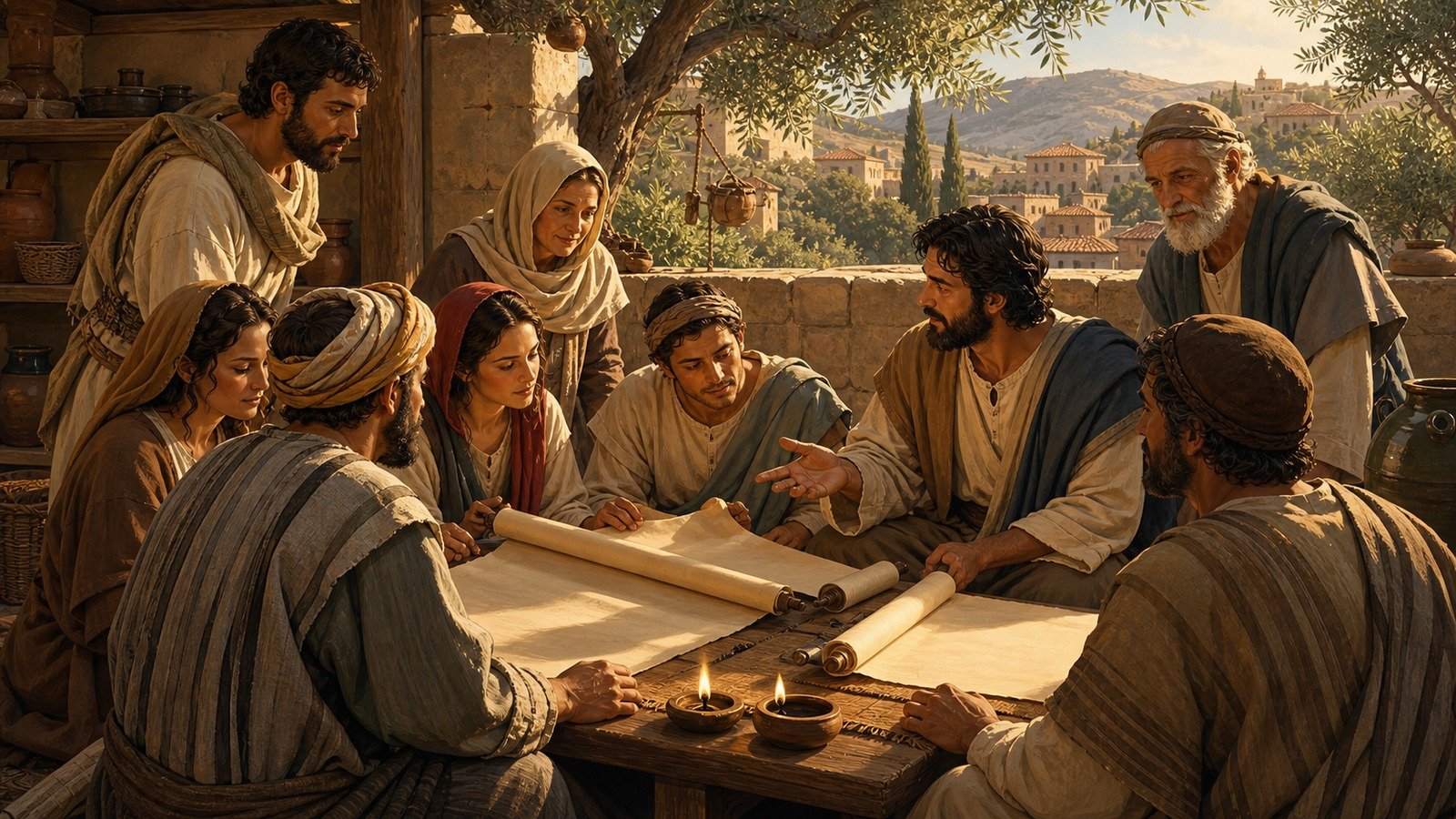
At Berea, Paul finds a more receptive hearing; Luke praises the Bereans for examining the Scriptures daily to test what Paul was telling them, though agitators from Thessalonica eventually follow and stir up trouble here too.
Further context
2 min readBerea lay about eighty kilometres south-west of Thessalonica, off the main road, in the foothills of Mount Vermion. Cicero, who passed through, describes it as a town out of the way, which is presumably part of why they went there at night.
On arriving, Paul and Silas went to the Jewish synagogue.
Now the Berean Jews were of more noble character than those in Thessalonica, for they received the message with great eagerness and examined the Scriptures every day to see if what Paul said was true.
That sentence has done a great deal of work in Christian history, and it is worth reading carefully.
The phrase rendered more noble character is a term for good birth that had come to mean open-minded or generous in outlook, the opposite of small. What made them so was not that they agreed. It was that they combined eagerness with checking.
The verb translated examined is a legal and judicial one, used of investigating a case or interrogating a witness, and they did it daily. A visiting teacher was making claims about their own Scriptures, and rather than accepting or rejecting him on the spot they went and looked.
Whole traditions have taken their name from this. Congregations calling themselves Berean have existed since the eighteenth century, and these few sentences are the standard warrant for the principle that any teacher may be checked against the source, including the one doing the teaching.
As a result, many of them believed, as did also a number of prominent Greek women and many Greek men.
Then the pattern reasserts itself. When the Jews in Thessalonica learned that Paul was preaching the word of God at Berea, some of them went there too, agitating the crowds and stirring them up.
Eighty kilometres, again, to break up a meeting.
The believers immediately send Paul to the coast, and Silas and Timothy stay behind. Those who escort Paul bring him to Athens and then return with instructions for the other two to join him as soon as possible.
Sopater of Berea is later named among the men who travel with Paul carrying the collection to Jerusalem, so the congregation lasted.
Nothing suggests Paul objected to being checked. He had come to argue from the Scriptures, and a congregation that went home and read them was doing exactly what he asked.
That the compliment is made at another church's expense is characteristic of the writer, who elsewhere records quarrels, failures and desertions without softening them.
Berea sits below Mount Olympus on the eastern side, and the road from Thessalonica runs through the plain the Macedonian kings ruled from. Paul was moved out of it by sea, which suggests the danger was thought to be considerable.
Sopater's presence on the delegation carrying the collection means Berea was still functioning years later, and contributing money, which is the practical measure of whether a three-week visit had achieved anything.
What the Bereans were praised for is a habit rather than a conclusion, and it is the only time in the New Testament that a congregation is commended for scrutinising an apostle.