

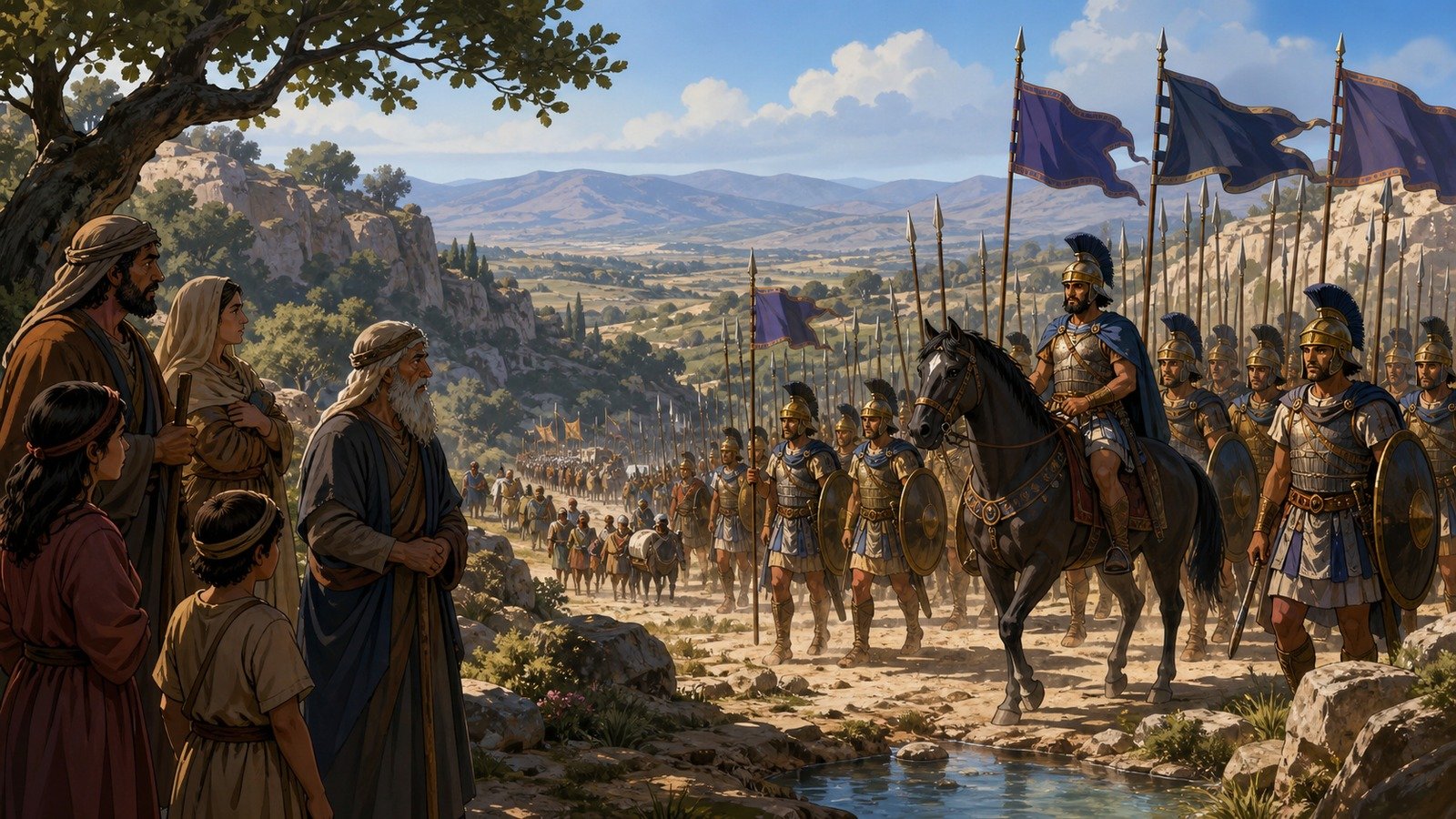
The Seleucid dynasty, ruling from Syria, wins Judea from the Ptolemies at the battle of Panium, bringing increasing Hellenistic cultural pressure on Jewish religious practice over the following decades.
No canonical Scripture reference (historical context outside the Protestant canon)
Further context
3 min readAntiochus III defeats the Egyptian army at Panium, near the source of the Jordan at the foot of Mount Hermon, in 198 BC, and Judea passes from Alexandria to Antioch. The site of that battle later becomes Caesarea Philippi, which is where Peter answers the question about who Jesus is.
The transfer is welcomed at first, and Jerusalem appears to have helped. A decree of Antiochus III preserved by a later historian grants the city substantial privileges: funds for sacrifices, timber for temple repairs, tax exemptions for the priesthood, elders and temple staff, three years' remission of taxes for the population, and permission to live according to the laws of their ancestors. There is also a prohibition on foreigners entering the sanctuary enclosure and on bringing unclean animals into the city.
That last provision matters for what comes two centuries later. Herod's temple carried Greek inscriptions warning Gentiles not to pass the inner barrier on pain of death, and two of those stones have been recovered, one in 1871 and one in 1935.
The good relations do not last, and the reason is money. Antiochus III overreaches, invades Greece, and is beaten by the Romans at Thermopylae and then decisively at Magnesia in 190 BC. The peace terms are ruinous: he loses Asia Minor and is required to pay fifteen thousand talents of silver in instalments, which is one of the largest indemnities in ancient history. He is killed shortly afterwards while attempting to loot a temple in Elam for funds.
His successors inherit that debt, and the pressure of it drives everything they do. A Seleucid official is sent to the temple treasury in Jerusalem to seize its deposits and is reported to have been driven off by a vision. The high priesthood begins to be sold. Jason buys it from Antiochus IV by offering more than the incumbent, who is his own brother, and adds a further payment for permission to build a gymnasium in Jerusalem and register the city's population as citizens of Antioch. Menelaus then outbids Jason by three hundred talents and is not even from the high-priestly family.
A gymnasium in Jerusalem is not a sports facility in the modern sense. It is the central institution of Greek civic life, entered by young men of the governing class, where exercise was performed naked, and the sources describe Jewish men undergoing surgery to disguise their circumcision in order to use it.
The gymnasium controversy also produced the first recorded Jewish culture war. What is described is not persecution but a voluntary movement among the Jerusalem upper class to adopt Greek manners, and the sources record priests abandoning their duties at the altar to attend the wrestling ground. The pressure came from inside before it came from outside.
The office that had run the country since the return is now a purchasable asset, held by whoever pays most to a foreign king who needs the money.
Antiochus III took Judea from the Ptolemies at the battle of Panium in 200 BC, near the springs at the foot of Mount Hermon where Caesarea Philippi was later built.
His initial policy was generous. Josephus preserves a decree granting the Jews the right to live according to their ancestral laws, exempting the temple staff from taxes, and contributing to the sacrifices.
What changed it was Rome. Antiochus was defeated at Magnesia in 190 BC and the peace terms imposed an indemnity of fifteen thousand talents, payable over twelve years, which turned the whole empire into a machine for raising money. He was killed while robbing a temple in Elam trying to pay it.
His successors did the same thing by other means. The high priesthood in Jerusalem was sold to Jason, who outbid his brother, and then to Menelaus, who outbid Jason and was not even from the high-priestly family.