

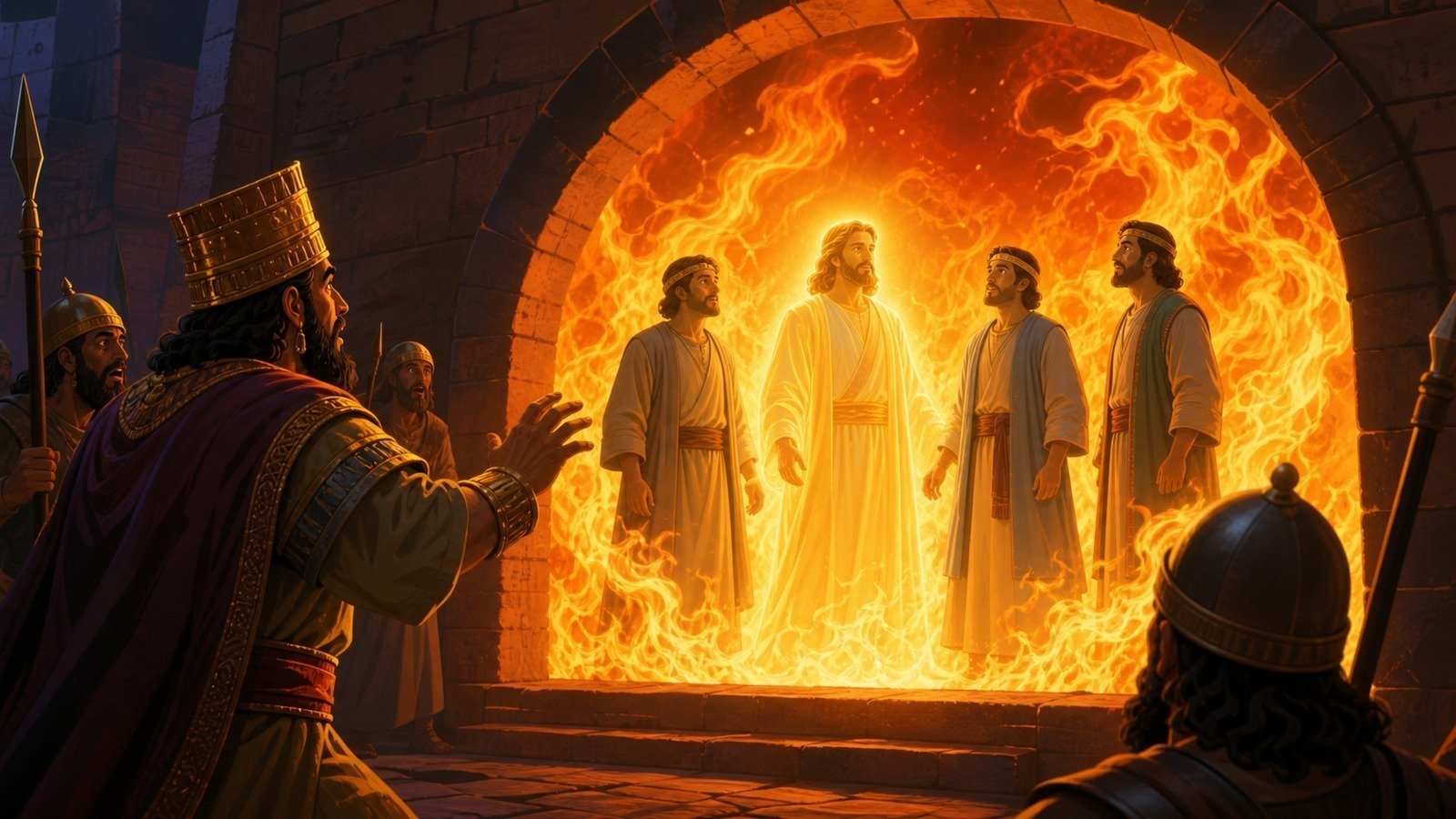
Daniel's three companions refuse to bow to Nebuchadnezzar's golden image and are thrown into a furnace heated seven times hotter than normal; they emerge unharmed, accompanied, the king observes, by a fourth figure "like a son of the gods."
Further context
3 min readNebuchadnezzar sets up an image of gold, twenty-seven metres high and under three metres wide, on the plain of Dura. Those proportions are far too narrow for a human figure and suggest a column or an obelisk with a figure on top.
The dedication is a state occasion. Satraps, prefects, governors, advisers, treasurers, judges, magistrates and all the other provincial officials are summoned, and the instruction is read by a herald: as soon as you hear the horn, flute, zither, lyre, harp, pipe and all kinds of music, you must fall down and worship the image. Whoever does not will immediately be thrown into a blazing furnace. That list of instruments is repeated in full four times, and the repetition is comic, a bureaucratic formula recited over and over at an event nobody could refuse to attend.
Some astrologers denounce the three Judaeans, and the denunciation is framed as an administrative complaint: there are some Jews whom you have set over the affairs of the province of Babylon who pay no attention to you. They neither serve your gods nor worship the image. Resentment at foreigners holding office is doing at least as much work here as religion.
The king gives them a second chance, and ends with a challenge: then what god will be able to rescue you from my hand?
Their answer is the reason the episode is remembered, and it turns on three words. If we are thrown into the blazing furnace, the God we serve is able to deliver us from it, and he will deliver us from Your Majesty's hand. But even if he does not, we want you to know that we will not serve your gods or worship the image of gold you have set up. They are not claiming to know the outcome. They are stating what they will do either way.
The furnace is heated seven times hotter and the soldiers who throw them in are killed by the heat. Then the king leaps to his feet and asks whether they did not throw three men in, because he can see four walking around unbound and unharmed, and the fourth looks like a son of the gods.
They come out with not a hair singed, their robes unscorched, and no smell of fire on them.
The three men are never heard of again after this. Daniel appears throughout the rest of the book and they do not, which has struck readers since antiquity, and there is no indication of what became of them.
The decree that follows makes it an offence to speak against their God, and the reason given is that no other god can save in this way. A king who had demanded universal worship of his own image ends by protecting the reputation of a god belonging to three of his junior officials.
The image is twenty-seven metres high and under three metres wide, which is far too narrow for a human figure and suggests a column or an obelisk with something on top.
There is a strong comic streak in the repetitions. The list of officials is given five times and the list of instruments six, and the effect of the repeated recital of satraps, prefects, governors, advisers, treasurers, judges, magistrates and all the other provincial officials, summoned by horn, flute, zither, lyre, harp, pipe and all kinds of music, is deliberately absurd.
The reply the three men give is the sentence the whole episode exists for, and its second half is what makes it: the God we serve is able to deliver us, and he will deliver us from Your Majesty's hand. But even if he does not, we want you to know that we will not serve your gods.
They state their obedience as unconditional before knowing the outcome.