

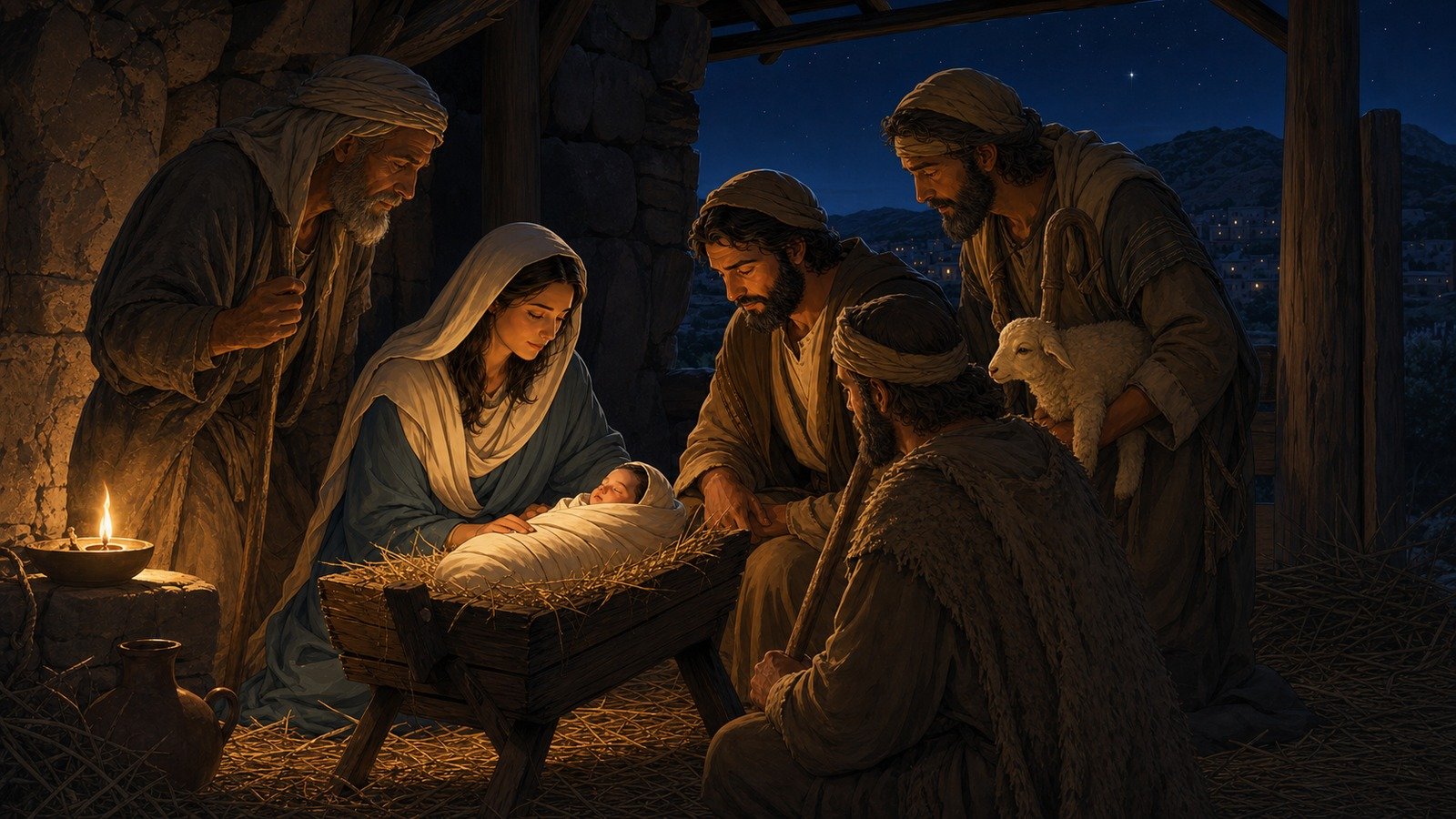
An angel announces the birth to shepherds keeping watch over their flocks at night, followed by "a great company of the heavenly host" praising God; the shepherds go to Bethlehem, find the child as described, and spread the news.
Further context
3 min readShepherds are living out in the fields near Bethlehem, keeping watch over their flocks at night, which is the detail most often used to argue about the season. Sheep were grazed outdoors around Bethlehem for much of the year and the practice does not settle the month either way.
What matters more is who they were. Shepherds in first-century Judea were at the bottom of the social order. Their work made ritual purity impractical, they were away from settlements for long periods, and later rabbinic sources treat their testimony as unreliable in a court of law. The first people told about the birth are men whose word would not have been accepted in a legal dispute.
The announcement comes with a formula that had a specific ring in the Roman world. I bring you good news that will cause great joy for all the people. Today in the town of David a Saviour has been born to you; he is the Messiah, the Lord. Good news, saviour and lord were all standard vocabulary of imperial proclamation. An inscription from Priene in Asia Minor, dated to 9 BC, describes the birthday of Augustus as the beginning of good news for the world and calls him a saviour. The wording of the announcement to shepherds is the wording an empire used about a Caesar.
The sign given is deliberately unimpressive: you will find a baby wrapped in cloths and lying in a manger. Wrapping an infant tightly in strips of cloth was ordinary practice and every newborn in the region was treated that way. The only unusual element is the feeding trough.
Then a great company of the heavenly host appears, and what they say is two lines: glory to God in the highest heaven, and on earth peace to those on whom his favour rests. The manuscript tradition divides over the last phrase, with some copies reading peace, goodwill towards men, which is the reading behind the familiar older English wording.
The shepherds go, find Mary, Joseph and the baby, and then do the one thing nobody asked them to do: they spread the word concerning what had been told them about this child, and all who heard it were amazed. Men whose testimony carried no legal weight become the first people to tell anyone.
They return glorifying and praising God for all the things they had heard and seen, which were just as they had been told. And a single line is recorded about the mother, and it recurs later after another episode: Mary treasured up all these things and pondered them in her heart.
Shepherds occupied an awkward position in that society. The work kept them away from the settled religious life of a town, and later rabbinic sources treat them with suspicion as people whose flocks grazed on other people's land, though how far that attitude ran in the first century is uncertain.
What is not uncertain is that they were poor, and that they are the first people told.
The announcement is made in imperial vocabulary. A saviour has been born to you; he is the Messiah, the Lord. Inscriptions across the empire use saviour, lord and good news of the emperor, and a famous decree from the province of Asia describes Augustus's birthday as the beginning of good news for the world.
The sign given is deliberately unimpressive: a baby wrapped in cloths and lying in a manger. That is not a portent in the sky; it is an address.