

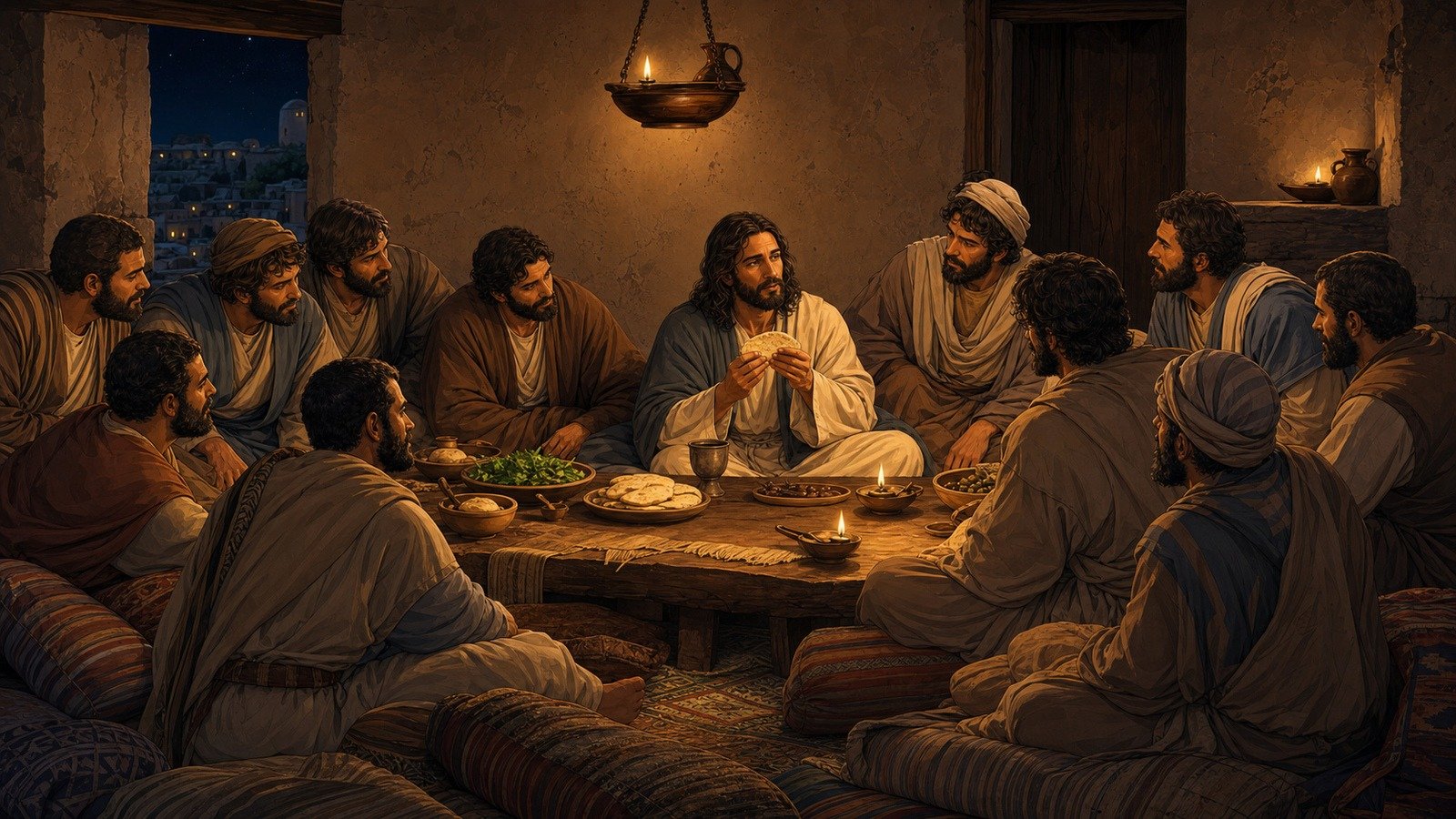
Sharing a final Passover meal with the Twelve, Jesus reinterprets the bread and wine as his own body and blood, given for them, establishing what the church came to call communion or the Lord's Supper, and predicts both his betrayal and Peter's coming denial.
Further context
2 min readJesus sends two disciples into the city with instructions that read like a prearranged signal: a man carrying a jar of water will meet you, follow him, and the owner of the house will show you a large upper room, furnished and ready.
A man carrying water was conspicuous, since that was women's work, so the sign was one nobody would miss and nobody could report in advance.
The meal is a Passover, and the shape of it matters for what he does with it. The Passover meal remembered the night Israel left Egypt: a lamb slaughtered at the temple that afternoon, unleavened bread because there had been no time for dough to rise, bitter herbs for the years of slavery, four cups of wine at set points, and a moment when the youngest present asked why this night was different from all others, and the head of the household explained what God had done.
Every element carried an explanation already. What he does is give two of them a new one.
He takes bread, gives thanks, breaks it and hands it to them: take and eat, this is my body given for you. Do this in remembrance of me. Then the cup, after supper: this cup is the new covenant in my blood, which is poured out for you.
The word covenant is doing heavy work there. A covenant was a binding agreement ratified by blood, and the one made at Sinai had been sealed when Moses threw blood from the sacrifices over the people and said, this is the blood of the covenant. Jeremiah had promised a new covenant, written on hearts rather than tablets, in which sins would be remembered no more. Saying new covenant in my blood at a Passover table joins those two things and applies them to himself.
What exactly happens to the bread and wine has divided Christians more sharply than any other question. Roman Catholic teaching holds that the substance becomes body and blood while the appearances remain; Lutherans hold that Christ is truly present in and with the elements; Reformed teaching holds a real spiritual presence received by faith; others take the meal as a memorial. Wars were fought partly over this. The disagreement is about the meaning of four words spoken in a borrowed room.
He also tells them one of them will betray him, and they begin to ask, one after another, surely not I?
They sing a hymn and go out to the Mount of Olives. The hymn would have been the closing psalms of the Passover liturgy, which include the line about the stone the builders rejected.
Whether the meal was the Passover itself has been argued for centuries, because three accounts read as though it was and the fourth appears to place the crucifixion at the hour the lambs were being killed, which would put the supper a day earlier. Proposed solutions include different calendars in use simultaneously, a difference in reckoning when a day began, and a deliberate arrangement by one writer to make a point about timing.
What is not disputed is the setting: Passover week, in Jerusalem, at night, with the city full and the authorities watching.