

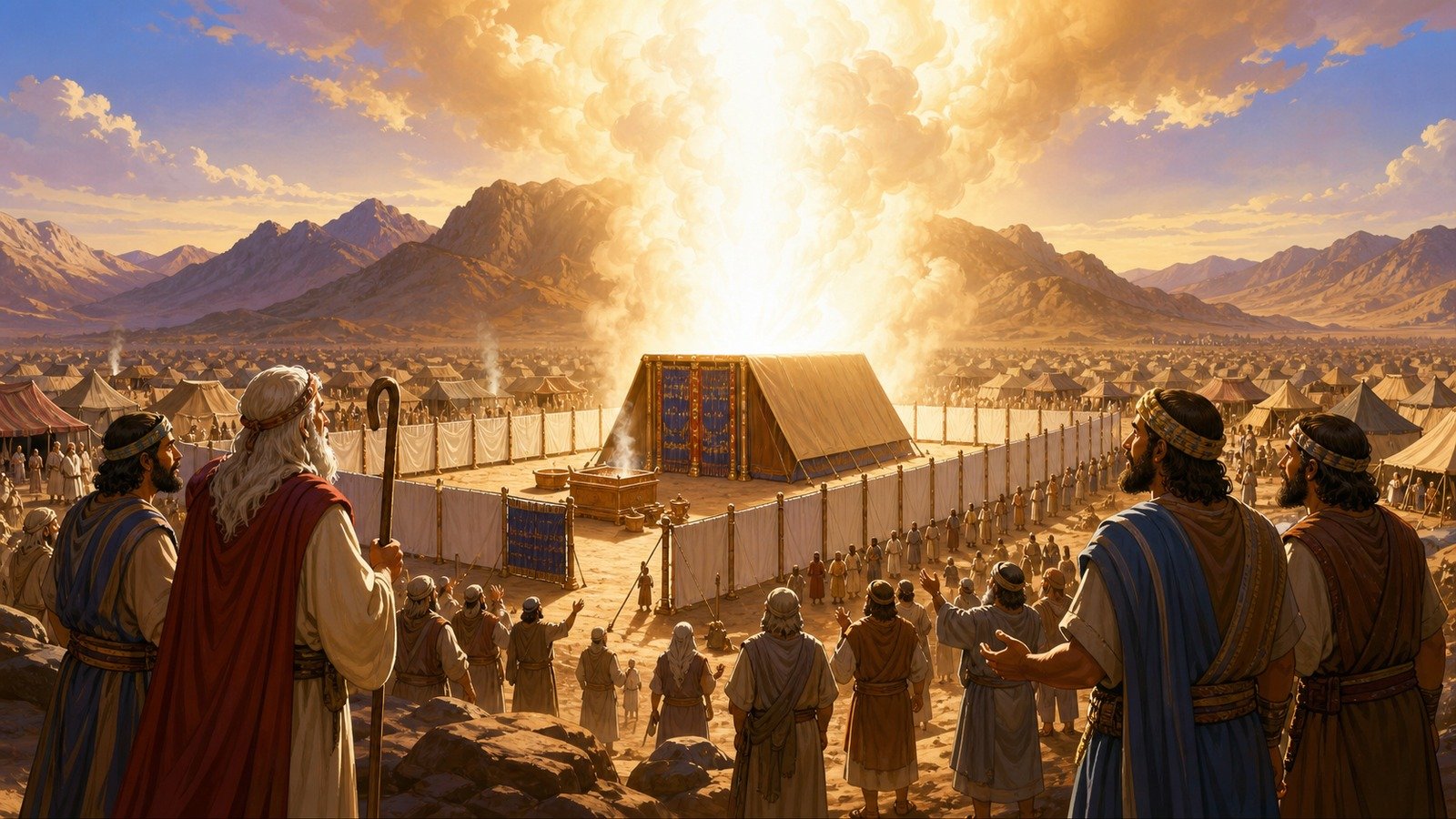
Skilled workers construct the tabernacle exactly as instructed; on completion, the glory of the Lord fills it so densely that Moses cannot enter, marking God's presence dwelling visibly among Israel.
Further context
2 min readThe construction begins with an appeal for materials and produces a problem no fundraiser expects. Everyone who is willing brings gold, blue and purple and scarlet yarn, linen, goat hair, ram skins, acacia wood, oil, spices and precious stones. The skilled women spin with their hands. The leaders bring the onyx stones. Then the craftsmen come to Moses and report that the people are bringing more than enough for the work, and an order goes through the camp telling everyone to stop. The community that melted down its jewellery for a calf has now given more than the sanctuary requires.
What follows repeats the earlier instructions almost word for word, this time in the past tense, describing the making of each item in the same order in which it was commanded. A modern editor would cut it. The repetition is the point: obedience is recorded in the same words as the command, and the refrain that everything was done just as the LORD commanded Moses appears more than a dozen times in the final inspection.
The assembly is dated, and it is the only precise date in this whole stretch: the first day of the first month in the second year, which is the first anniversary of the departure from Egypt.
Moses erects the frames, spreads the tent, places the ark inside with the poles in its rings, hangs the shielding curtain, sets out the bread, lights the lamps, puts the altar of incense in place and burns fragrant incense on it. Each act is followed by the same clause about doing as he was commanded.
Then the cloud covers the tent and the glory of the LORD fills it, and he cannot go in. The man who has been climbing the mountain and entering the tent for two years is shut out of the building he has just finished, and that is where the book stops, together with a note that the cloud governed every stage of the journey afterwards: when it lifted they set out, and when it did not they stayed where they were.
The parallels with the opening of Genesis are close and unlikely to be accidental. Seven speeches lead to a seventh about rest, the work is completed, inspected and blessed, and the Hebrew clause reporting that Moses finished the work matches the clause reporting that God finished the work of creation.
One year has passed since the night they walked out of the Delta. In that year a crowd of escaped labourers has been given a legal code, a priesthood, a calendar, a marching order and a building, and has broken the first commandment it received and been forgiven for it. What was a labour force belonging to somebody else is now a community with a constitution and something at its centre that it built with its own jewellery.
John uses the vocabulary of this scene for something else entirely. The Greek verb behind his statement that the Word made his dwelling among us means to pitch a tent, and the sentence continues that we have seen his glory, which is exactly what filled this one on the day it was finished.