

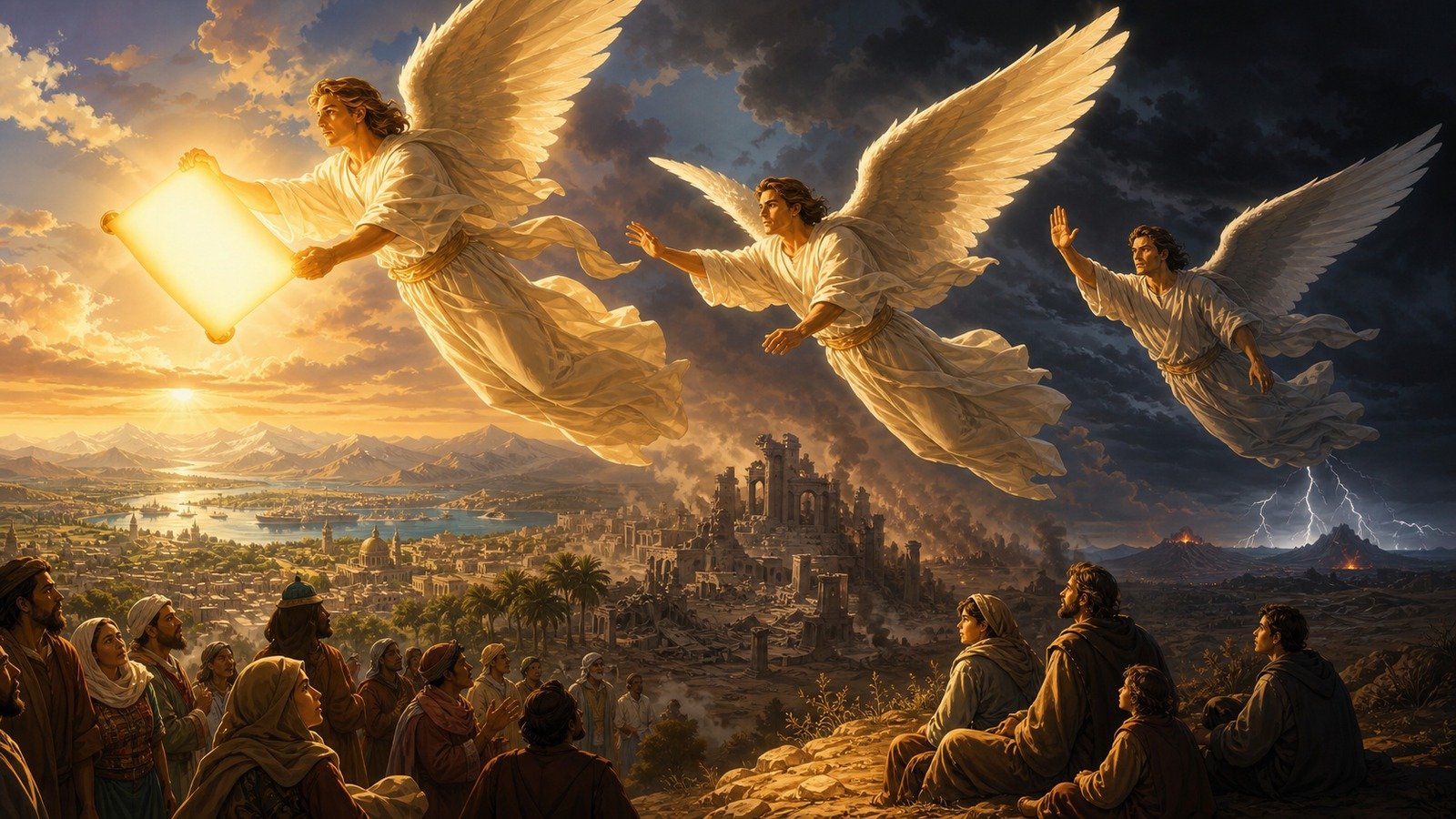
Three angels fly in succession, announcing the eternal gospel to every nation, declaring the fall of Babylon, and warning of judgement on those who worship the beast, followed by a blessing on those who die in the Lord from then on.
Further context
2 min readThree angels fly in midair one after another, and each has something to say.
The first has the eternal gospel to proclaim to those who live on the earth, to every nation, tribe, language and people. What he says is not what the word gospel usually introduces in the New Testament. There is no mention of the cross, forgiveness or faith. What he says is: fear God and give him glory, because the hour of his judgement has come. Worship him who made the heavens, the earth, the sea and the springs of water.
That is an appeal to creation, addressed to people who have no Scripture and no background in Israel, and it is close to what Paul said at Lystra and at Athens.
The second announces a fall in the past tense: fallen! Fallen is Babylon the Great, which made all the nations drink the maddening wine of her adulteries. Babylon has not yet been described in the book at all; it is introduced by having its destruction announced, and the details come four chapters later.
The name is doing double work. Babylon was the empire that destroyed the first temple and took the population into exile, and by the first century Jewish and Christian writers used it as a code word for Rome, which had destroyed the second.
The third angel gives the warning these three are remembered for. If anyone worships the beast and its image and receives its mark, they too will drink the wine of God's fury, and will be tormented in the presence of the holy angels and of the Lamb. There will be no rest day or night for those who worship the beast.
It is the harshest thing said anywhere in the book, and it is addressed to people living where refusing the mark meant not being able to buy food.
Then a pause and a direct instruction to the reader: this calls for patient endurance on the part of the people of God who keep his commands and remain faithful to Jesus.
And a voice from heaven says: write this. Blessed are the dead who die in the Lord from now on. Yes, says the Spirit, they will rest from their labour, for their deeds will follow them.
That is one of seven blessings scattered through the book, and it is the only one pronounced on people who have been killed.
The three announcements are the only place in the book where a message is proclaimed to the world at large rather than to the churches, and it comes at the point of greatest pressure.
Blessings in this book number seven, like everything else in it, and they fall on those who read it aloud and hear it, on the dead who die in the Lord, on the one who stays awake, on those invited to the wedding supper, on those who share in the first resurrection, on the one who keeps its words, and on those who wash their robes.
That the second angel announces Babylon's fall before Babylon has been introduced is characteristic of the way the book works, stating an outcome and then circling back to explain it.