

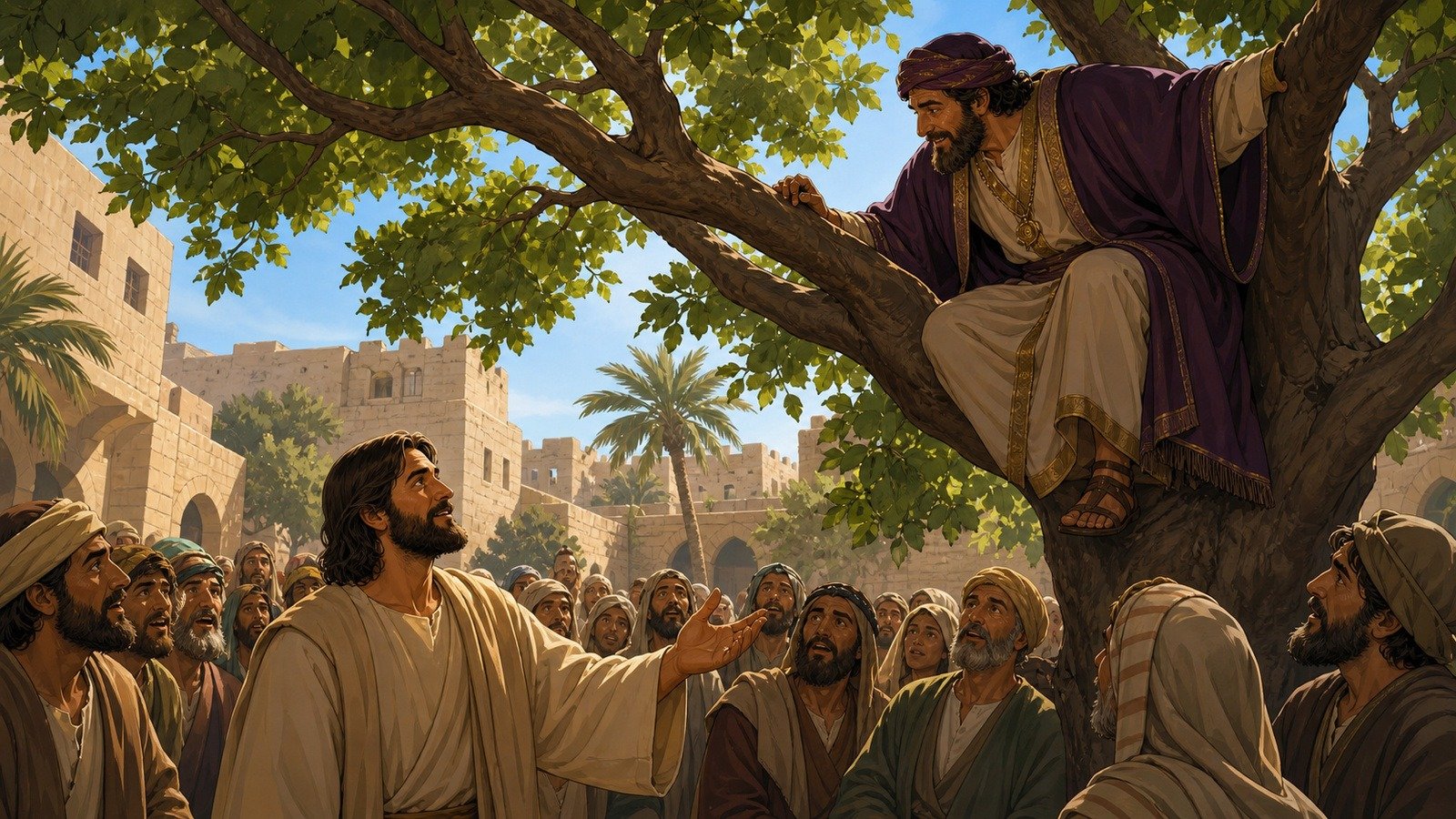
A short, wealthy tax collector, Zacchaeus, climbs a tree to see Jesus over the crowd and is rewarded with a personal visit that leads to his public repentance and restitution, "today salvation has come to this house."
Further context
3 min readJesus is passing through Jericho, and a man there is described in three words that between them explain everything that follows: a chief tax collector, wealthy, and short.
Chief tax collector is a title that appears nowhere else in Greek literature, and it most probably means he held a contract and had other collectors working under him. Jericho was a good posting. It sat on the trade route from the east, produced balsam and dates that were exported at high value, and had a customs post. A man in that position took his cut from everything moving through.
He wanted to see who Jesus was, but because he was short he could not see over the crowd.
There is more in that sentence than a physical problem. A crowd will let a man through if it wants to, and this one did not. He runs ahead and climbs a sycamore-fig tree, a broad tree with low branches, easy to climb, which is the only reason a wealthy official in a long robe could get up one at all. Running and climbing were both undignified, and he does them anyway.
When Jesus reaches the spot he looks up and uses his name. Zacchaeus, come down immediately. I must stay at your house today.
Staying in a man's house was a public act of association, and the crowd reacts exactly as expected: all the people saw this and began to mutter, he has gone to be the guest of a sinner.
The name itself carries an irony that a Jewish audience would catch. Zacchaeus is from a Hebrew root meaning pure or righteous.
He comes down at once and welcomes him gladly, and then makes a declaration standing up, which is the posture for a formal undertaking. Look, Lord, here and now I give half of my possessions to the poor, and if I have cheated anybody out of anything, I will pay back four times the amount.
Both figures are substantial. The law required restitution of what was taken plus a fifth, and fourfold repayment was the penalty for stolen livestock that had been sold or slaughtered, the harshest category. He is applying the strictest measure available to himself, voluntarily, and giving away half of the remainder first.
Whether the verbs should be read as present practice rather than a new resolution has been argued, since the Greek forms allow it, but the crowd's reaction and the answer given both fit a change taking place in front of them.
Today salvation has come to this house, because this man, too, is a son of Abraham. That last phrase restores something the muttering crowd had taken from him.
For the Son of Man came to seek and to save the lost.
Sycamore-figs grew along the Jordan valley and produced a poor-quality fruit eaten by the very poor, and the trees were large, spreading and low-branched. A specimen is still shown to visitors in Jericho, though no tree that old survives.
The encounter is the last thing recorded before the road up to Jerusalem, and it is placed immediately after a rich man walked away unable to give anything up. One wealthy man was told to sell everything and could not. Another, hearing nothing of the sort, volunteers half. Why the two men went opposite ways is unexplained, and they are set side by side without comment.