

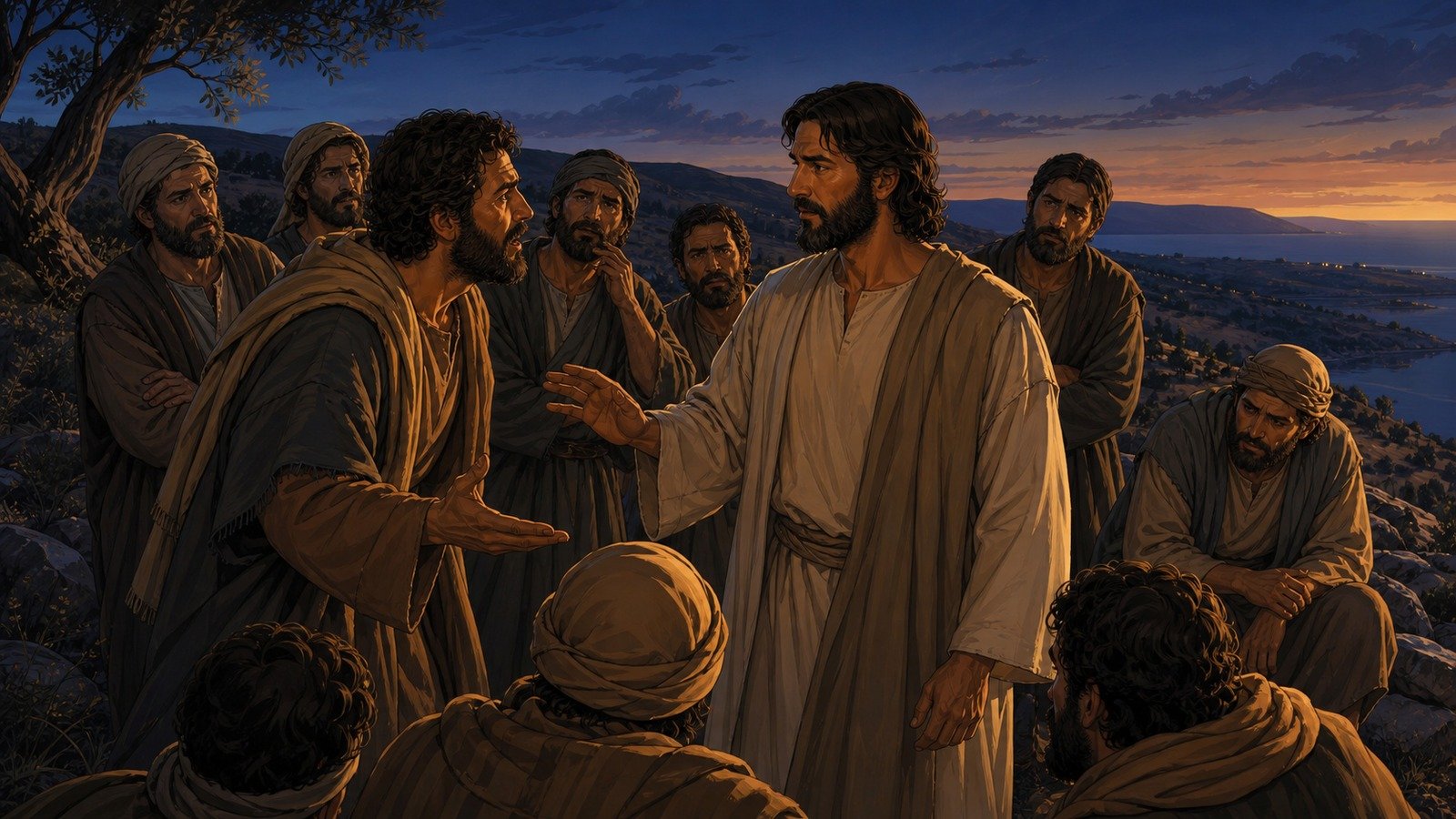
Jesus tells his disciples plainly for the first time that he must suffer, be rejected, be killed and rise again three days later; Peter's objection draws a sharp rebuke, and Jesus calls anyone who would follow him to "take up their cross" as well.
Further context
3 min readFrom that time on, and the phrase marks a hinge, Jesus began to explain to his disciples that he must go to Jerusalem and suffer many things at the hands of the elders, the chief priests and the teachers of the law, and that he must be killed and on the third day be raised to life.
Those three groups together are the Sanhedrin, the seventy-one member council that governed Jewish internal affairs under Roman oversight, presided over by the high priest. Naming all three is naming the entire national leadership.
He spoke about this plainly, which is stated as though it were new. Everything before this had come in parables, private explanations and instructions not to tell anyone. Now the subject is stated openly, and the word rendered must is the strong one, describing something that has to happen.
Peter takes him aside and begins to rebuke him. Minutes after being told his insight came from heaven, he is correcting the man he has just called Messiah. What he says is a strong denial: never, Lord. This shall never happen to you.
There is nothing perverse in the objection. Nothing in the expectation of a coming deliverer included his execution by the authorities he was supposed to overthrow. A crucified Messiah was, on the face of it, a contradiction, and Paul later concedes as much when he calls the message a stumbling block to Jews and foolishness to Greeks.
The reply is the harshest sentence spoken to any follower. He turns, looks at the disciples, and says to Peter: get behind me, Satan. You do not have in mind the concerns of God, but merely human concerns.
Those words echo the wilderness, where the same offer was made in a different voice: authority without suffering. The rebuke identifies where the suggestion is coming from.
Then he calls the crowd along with the disciples and states the terms. Whoever wants to be my disciple must deny themselves and take up their cross and follow me.
Taking up a cross was not a metaphor to that audience. Crucifixion was a Roman punishment for slaves, rebels and provincials, deliberately public and deliberately prolonged, and the condemned carried the crossbeam to the site through the streets. Varus had crucified two thousand men in Judea within living memory of some listeners' parents. A man walking with a crossbeam on his shoulders was a man already dead, walking to the place where it would be finished.
Whoever wants to save their life will lose it, and whoever loses their life for me will find it. What good is it for someone to gain the whole world, and forfeit their soul?
The three predictions are recorded in the same order in three of the four Gospels, and each is followed by a display of misunderstanding and then by teaching about service. Whether that arrangement reflects the order of events or the way the material was taught, it is consistent, and it shapes how the second half of his public work reads.
Nothing here suggests resignation. The word used for must describes something laid on him, and the objection is answered not with sorrow but with a rebuke, which is the response of a man being offered a way out he has already refused once in the wilderness.