

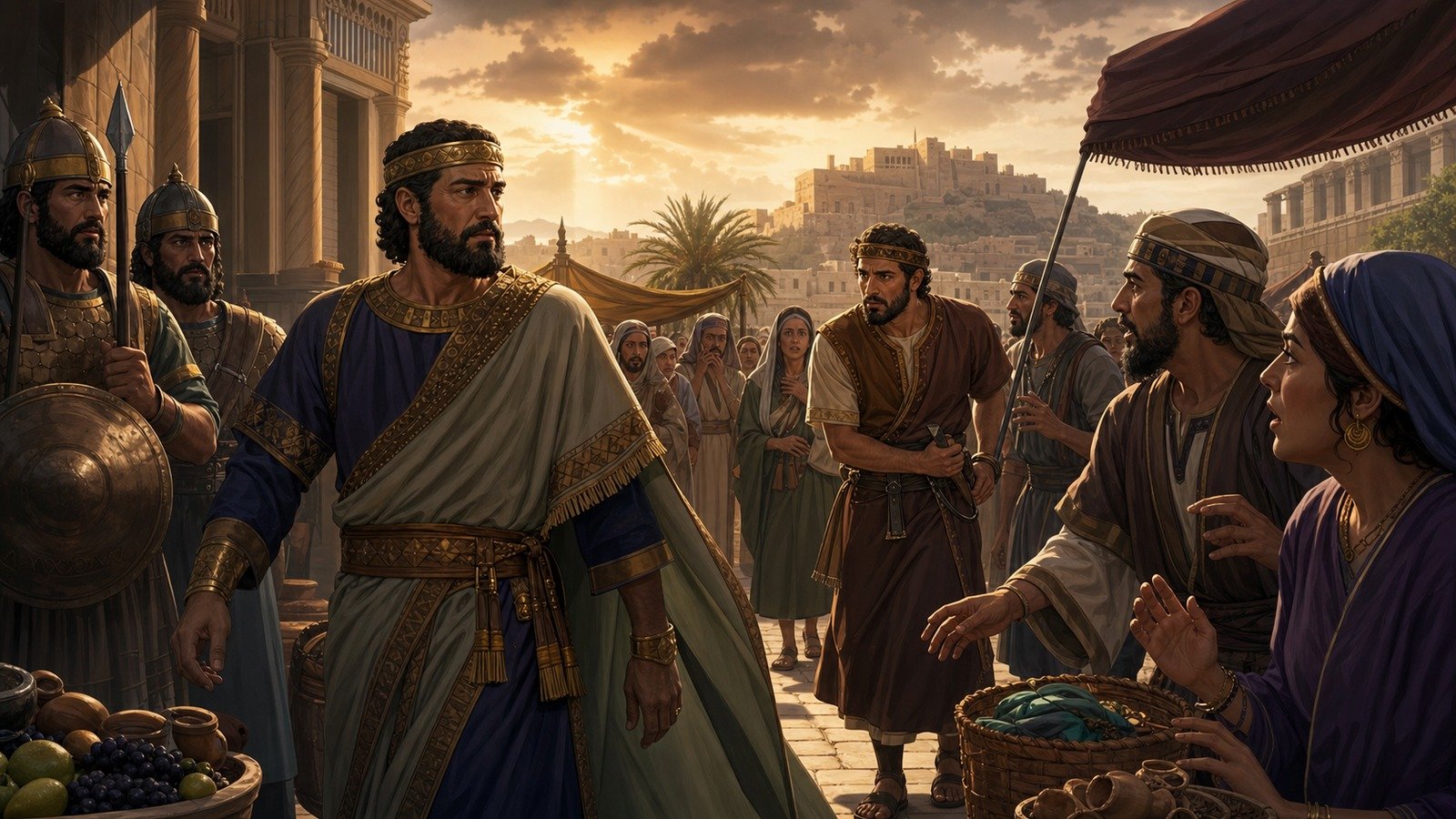
Jeroboam II's son Zechariah reigns only six months before being assassinated in public by Shallum, ending Jehu's dynasty exactly as an earlier prophecy to Jehu had specified, "four generations."
Further context
3 min readSix months, and then Shallum son of Jabesh attacks him in front of the people, assassinates him and succeeds him.
He is the fourth generation of Jehu's line, and the promise made to his great-great-grandfather is quoted at the moment it expires: this is the word of the LORD which he spoke to Jehu, saying, your descendants will sit on the throne of Israel to the fourth generation. So it came to pass. A dynasty ends exactly where it was told it would end, and the last of it lasts half a year.
What follows is the collapse of the northern kingdom as a functioning state, and the pace of it is the most eloquent thing about the period. In roughly twenty years the throne changes hands six times, four of those by assassination, and the kingdom loses most of its territory to Assyria before losing the rest of it.
The forty-one years of Jeroboam II had produced the largest borders and the greatest prosperity in the kingdom's history. Within six months of his son taking over, the murders start, and they do not stop until there is nothing left to fight over.
The assessment given to Zechariah is the same one applied to every northern king without exception: he did evil in the eyes of the LORD, as his predecessors had done, and did not turn away from the sins of Jeroboam son of Nebat, which he had caused Israel to commit. That formula has now been applied nineteen times over two hundred years, without a single exception in either direction, and it always refers to the two calves set up at Bethel and Dan in the first weeks of the kingdom's existence.
Assassination in public, described as taking place in front of the people, is a change of method from earlier coups, which were carried out in a palace or a besieged camp. Whatever central authority the crown had held is now gone, and a man can kill a king in the open and take his place.
The six months also mark the end of something that had held for a century. Jehu's line had produced the only orderly father-to-son succession the north ever managed across four generations, and it had done so while the kingdom lost most of Transjordan, paid tribute to Assyria and then recovered its borders under Jeroboam II. What follows is not decline but disintegration.
Hosea, working through these years, describes exactly this: they devour their rulers; all their kings fall, and none of them calls on me. It is one of the few places where a prophetic complaint can be checked against a sequence of events and matches it precisely.
Six months, and with him the house of Jehu ends after four generations, exactly as had been promised to Jehu and no further.
Shallum attacks him in front of the people, which is a public assassination rather than a palace one, and the writer notes that this fulfilled the word spoken to Jehu.
What follows is the most unstable stretch in either kingdom. Between the death of Jeroboam II and the fall of Samaria, about thirty years, there are six kings, four of whom are murdered by their successors, and the country loses first its territory east of the Jordan and then Galilee before losing everything.
Assyria under Tiglath-Pileser III had resumed expansion westward, and every one of those coups is partly about whether to submit or resist.